
Five Things Not to Do Straight After a Knee Replacement
18 August 2026

The operation is the part everybody worries about, and it is largely out of your hands. The fortnight afterwards is almost entirely in your hands, and it does more to shape the final result than most people realise.
Here are five things not to do in that window, from Perth knee surgeon Dr Rhys Clark, who performed 401 hip and knee replacements in 2025. The first one is the one nearly everybody gets wrong.
1. Don’t put a pillow under your knee
It feels wonderful. That is the problem.
Resting with a pillow tucked under the knee supports the joint in a slightly bent position, and it is genuinely more comfortable in the first few days. But a knee that spends hours a day resting bent starts to settle that way, and can end up with a flexion contracture — a knee that will no longer fully straighten.
Losing the last few degrees of extension matters more than losing a bit of bend. You need a knee that straightens completely to walk without a limp; without it, the quadriceps works harder every step, the gait never quite normalises, and it is one of the more common reasons someone is disappointed with an otherwise well-performed knee replacement.
It is also much harder to get extension back than to keep it.
Instead: if you want to elevate the leg, put the pillow under your heel and calf, so the knee hangs straight with gravity gently helping it extend. Lying flat with the heel propped for periods through the day is one of the most useful things you can do in the first fortnight, and it costs nothing.
2. Don’t wait for it to feel better — and don’t blitz it either
This is the one people get wrong in both directions, and the two errors look nothing alike.
Too little. The instinct is to let things calm down first, then start the exercises. It is completely understandable and it is backwards.
Scar tissue inside and around the knee matures over the weeks following surgery. Range of movement won early, while that tissue is still forming, is far easier to gain and to keep than range chased later once it has tightened. Most patients begin moving and bearing weight within hours of surgery for exactly this reason.
Waiting until the knee feels ready generally means waiting past the point at which it was easiest.
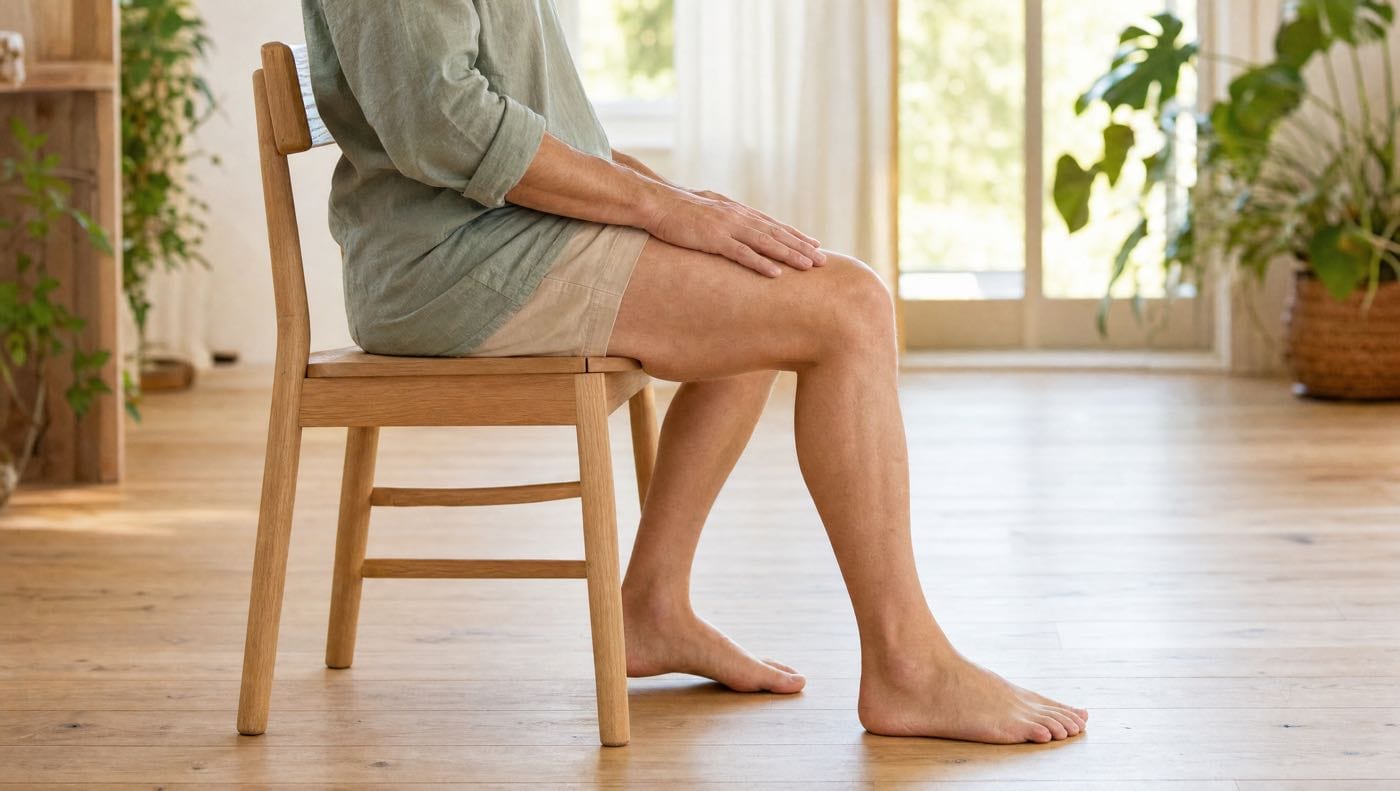
There is a real deadline attached to this. If a knee has not regained adequate bend by around six to twelve weeks, one of the options discussed is a manipulation under anaesthetic — going to sleep briefly so the knee can be moved through its range to break down the tissue restricting it. It works, but nobody wants a second anaesthetic, and the work you do in weeks one and two is the best insurance against needing one.
Too much. The opposite error is just as common and usually arrives in week two, when the early progress is encouraging and you feel able to push. You have a good day, you do considerably more than yesterday, and the knee answers with swelling, heat and pain that then limits how far it will move for the next several days. Swelling is not just uncomfortable — it physically blocks the bend. You end up further back than if you had done less.
The rule that resolves both. Little and often, and treat the knee’s response as data rather than as a verdict on your character. Several short sessions across the day beat one heroic one. If the knee is hotter and more swollen the following morning, yesterday was too much — ease off and build again, rather than either pushing through it or stopping altogether.
Follow the specific programme your physiotherapist and surgical team give you rather than a generic one. Consistency beats intensity, every time.
3. Don’t ration your pain relief
A lot of people try to be stoic about this, or worry about becoming dependent, and take less than they were prescribed.
The difficulty is that pain relief after a knee replacement is not just about comfort. It is what makes the movement possible, and the movement is what determines the result. A patient in too much pain cannot do the physiotherapy, and a knee that is not moved in the first fortnight stiffens.
Take the pain relief before physiotherapy rather than after, so you are covered while you are working. Take it on the schedule you were given rather than waiting until things become unbearable and then chasing it — pain is considerably easier to stay ahead of than to catch up with.
If the regimen you have is not controlling the pain, that is a reason to phone the rooms rather than to endure it. And if you have concerns about what you have been prescribed, raise them — that is a much better conversation than quietly halving the dose.
4. Don’t sit still for hours, and don’t stop the clot prevention early
Two related things, both about blood flow.
A knee replacement raises the risk of a clot forming in the leg — a deep vein thrombosis — which in a small number of cases can travel to the lungs. That risk is highest in the first weeks and it is why you will be given some form of clot prevention.
Complete the full course you were given, even once you are feeling well and moving about. People stop early precisely because they feel better, which is the point at which they assume it is no longer needed.
Alongside that, avoid long stretches of sitting completely still — in a recliner, in front of the television, or in a car. Get up and move regularly through the day, and do the ankle pumps you were shown while you are sitting. They are unglamorous and they work by keeping the calf muscle pumping blood back up the leg.
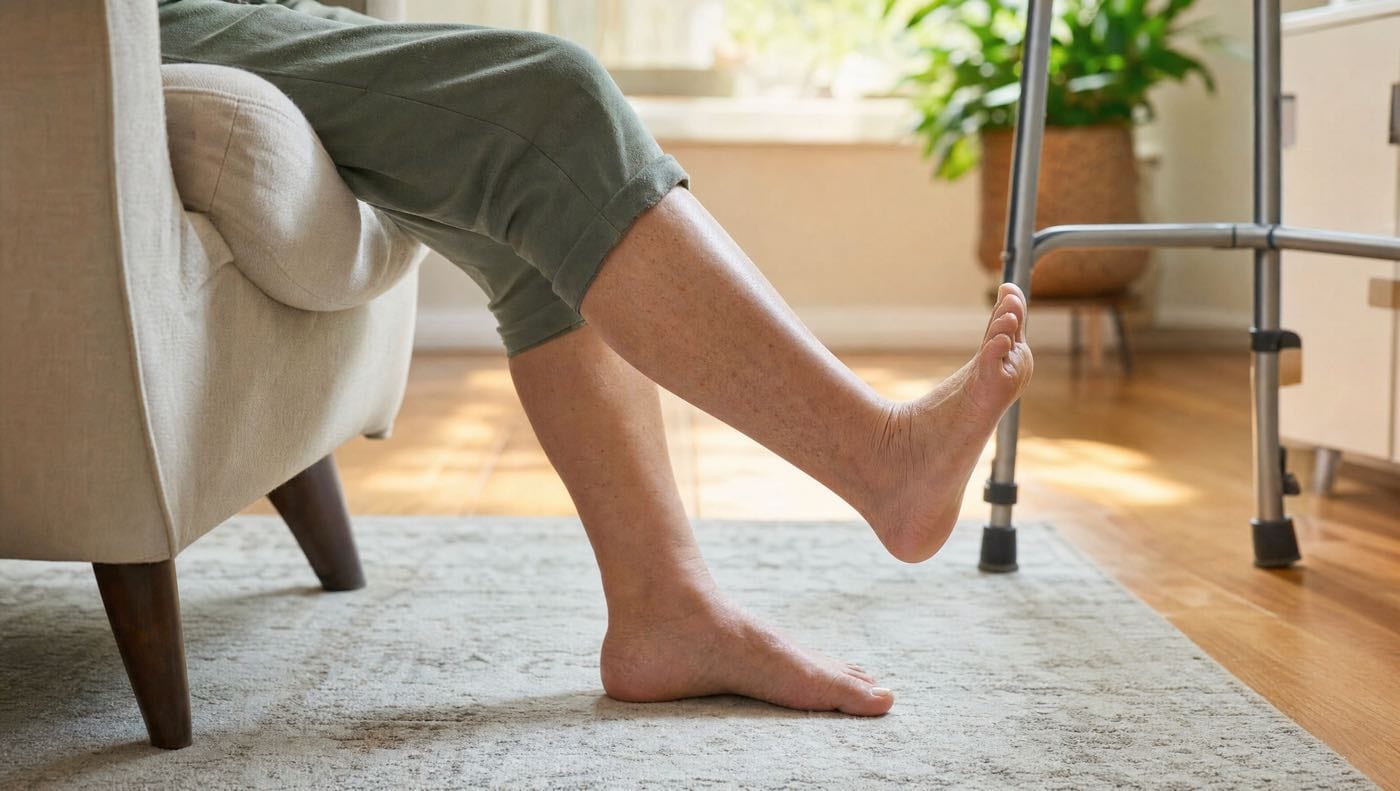
Long car trips and flights need specific advice in the early weeks. Ask before you book anything.
5. Don’t wait and see if something worries you
By far the commonest reason people delay phoning is not wanting to make a fuss, or a suspicion that they have done something wrong and would rather not admit it.
Most concerns after a knee replacement turn out to be an ordinary part of healing. Finding that out costs one phone call. The small number that are not ordinary need to be dealt with early, and the cost of a late call is much higher than the cost of an unnecessary one.
What each of these signs actually means, and which ones need an ambulance rather than a phone call, is set out on warning signs after a knee replacement.
Phone the rooms on (08) 6332 6365 without waiting for your next appointment if you notice:
- Fever or chills, or feeling generally unwell
- Increasing redness, heat or spreading swelling around the wound
- Discharge or fluid coming from the wound
- Pain that is escalating rather than gradually easing
- Calf pain, tenderness or swelling, particularly on one side
Sudden shortness of breath or chest pain is an emergency — call 000.
And one more: don’t judge it at six weeks
Six weeks is the number everybody fixes on, and it is not when a knee replacement is finished.
Most people are walking without aids and back to ordinary daily life somewhere between six and twelve weeks. But swelling, stiffness at the end of range, and the feeling that the knee is not quite yours can all keep improving for a year or more. Assessing the result at six weeks is assessing it well before it is done.
It is also worth not measuring yourself against someone else. Recoveries differ enormously depending on age, general fitness, how stiff the knee was beforehand, and whether anything else is going on. Somebody else being back on the golf course at eight weeks tells you very little about your knee.
The people who do best tend to be the ones who keep doing the work through the flat middle stretch, when the dramatic early improvements have stopped and the finished result is still months away.
Knee Replacement Recovery sets out the full timeline week by week — the hospital stay, the first fortnight, when driving becomes possible, and what the first year realistically looks like.
If you have not had surgery yet and are reading this to know what you are in for, Do I Need a Knee Replacement? works through the decision, and total knee replacement and robotic-assisted knee replacement explain the operation and how it is planned.
Dr Rhys Clark is a knee and hip replacement surgeon in Perth, consulting at Murdoch and Mandurah and operating at St John of God Murdoch, with public lists at Sir Charles Gairdner Hospital.
Questions about your own recovery are always better asked than not — phone the rooms on (08) 6332 6365 or email info@rhysclark.com.au.
Common questions
What should you not do after knee replacement surgery? +
Five things matter most in the first fortnight. Do not put a pillow under your knee while resting — it feels good and encourages the knee to settle bent, which is the hardest thing to recover. Do not wait for the pain to settle before you start bending it, because the window for regaining movement is early — but do not blitz it either, since overdoing it produces swelling that physically blocks the bend for days. Do not ration your pain relief, since it is what makes the physiotherapy possible. Do not sit still for hours or stop your clot prevention early. And do not wait and see if something worries you — phone.
Why should you not put a pillow under your knee after knee replacement? +
Because it holds the knee slightly bent for hours at a time, and a knee that habitually rests bent can settle into a fixed bend — a flexion contracture. Losing the last few degrees of straightening is one of the hardest things to recover, and it affects walking more than losing a little bend does, because you need a knee that straightens fully to walk without a limp. If you want to elevate the leg, prop it under the heel so the knee hangs straight, not under the knee itself.
How soon should I start bending my knee after a knee replacement? +
Straight away, guided by your physiotherapist and the instructions from your surgical team. Most patients begin moving and bearing weight within hours of surgery. The reason for the urgency is that scar tissue matures over the following weeks, and range of movement gained early is far easier to keep than range recovered later. Waiting until the knee feels comfortable enough to move usually means waiting past the point where it was easiest. The opposite error matters just as much: doing far too much on a good day produces swelling and heat that limit movement for several days afterwards. Little and often is the approach that works — and if the knee is hotter and more swollen the next morning, that is feedback that yesterday was too much.
How long does recovery from a knee replacement really take? +
Longer than six weeks, which is the figure most people fix on. Most are walking without aids and back to ordinary daily life by six to twelve weeks, but swelling, stiffness at the end of range and the sense that the knee is not quite yours can continue improving for a year or more. Judging the result at six weeks is judging it well before it is finished.
Can I kneel or twist on my knee after a knee replacement? +
Avoid twisting or pivoting on the operated leg in the early weeks — turn by taking small steps rather than swivelling on the foot. Kneeling is generally not harmful once the wound has healed, but it is often uncomfortable and many people find it remains so long term. It is one of the more common permanent limitations after a knee replacement and worth knowing about beforehand rather than discovering afterwards.