
Looking After Someone After a Knee Replacement
A practical guide for partners and family caring for someone after a knee replacement: medication, ice, helping them up and into the shower, nights, how much help is too much, and what to watch for.
If you are reading this, you are probably the person who will be doing the driving, the cooking and the night shifts for a while. It is harder than it looks from outside, and much of what helps is practical rather than medical.
This page is for the carer. The patient’s own version, with the clinical detail, is the first two weeks at home.
Before surgery: agree the plan
An hour of planning in advance saves a great deal in the first week.
- Know the medication plan. What is taken, when, and for how long, including the clot prevention. Write it on one sheet, and put it where you both can see it.
- Find out who is doing what. Meals, washing, driving, pets, the phone calls. Write that down too.
- Set the house up for a walking aid. Clear the paths, lift the rugs, put a night light on the way to the toilet, and consider a raised seat. Preparing for a knee replacement covers this in more detail.
- Cook ahead. A freezer of meals that need only heating is the single most useful thing you can do the week before.
- Practise standing and sitting together, so you both know how it feels before it matters.
The first days
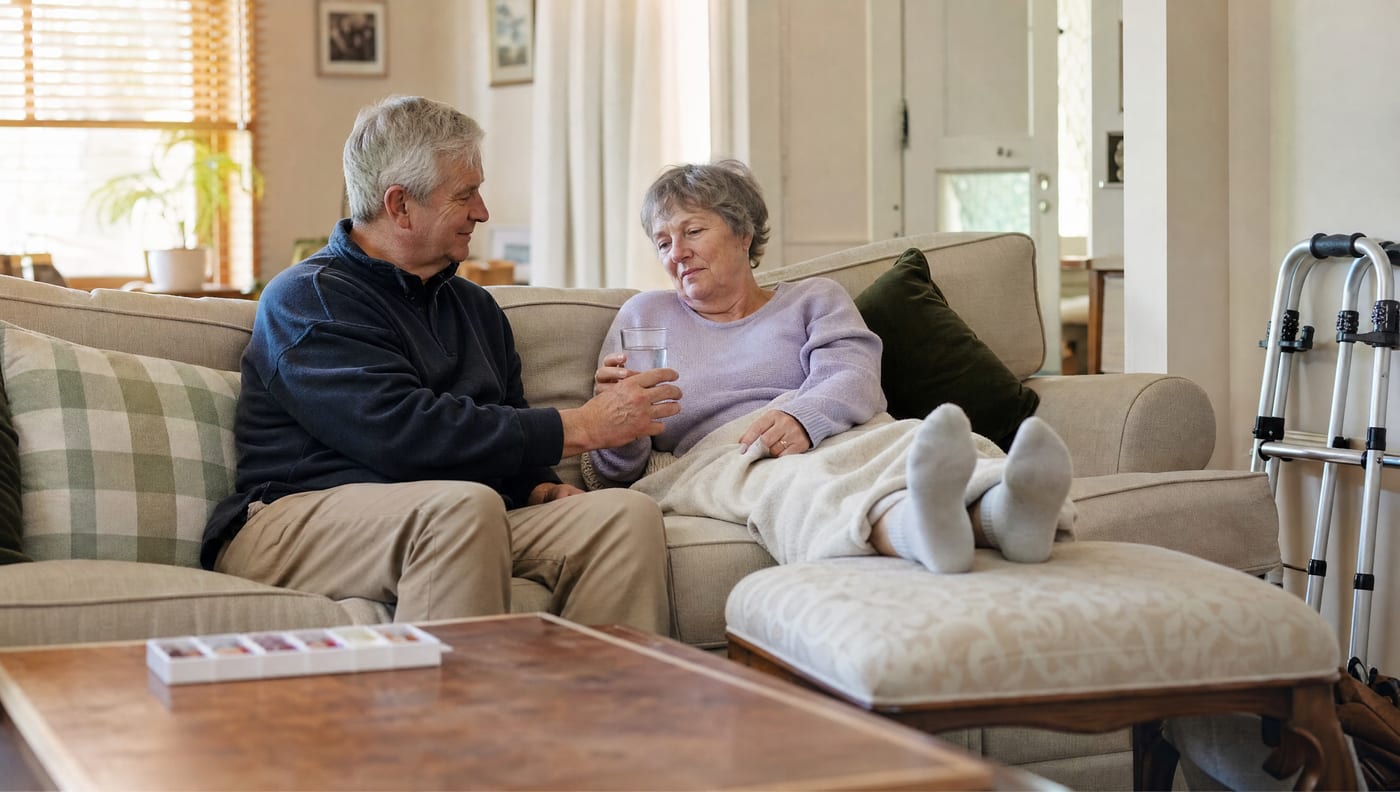
Medication on time. This is the biggest single thing a carer can do. Pain relief that is taken on schedule works better than pain relief taken when the knee is already shouting. A pill organiser and a phone alarm help. Pain relief and coming off it sets out why.
Ice and elevation. Both reduce swelling, and swelling is what limits movement. Keep a rotation of ice packs in the freezer so there is always a cold one ready. Elevation means the heel up and the knee straight. Never a pillow under the knee, which holds it bent. What not to do after a knee replacement explains why.
Getting up. Stand beside them, not in front. Let them push up from the chair arms with the good leg doing the work, with a hand at the waist or belt rather than pulling on an arm or the operated leg. On stairs: up with the good leg, down with the operated one, and you stay one step below.
Toilet and bathroom. Urgency is common, and a slow walk to the toilet at night is a bad time to rush. Keep the path lit and clear, make sure the seat is the height they need, and put it down yourself.
The first showers. Be there. A shower chair, a non-slip mat, a grab rail and a dry towel in reach. The risky moment is standing up afterwards, with a wet foot. Follow the hospital’s instructions about the dressing.
Bowels. Opioid pain relief constipates, and it is a more common complaint than most people expect. Fluids, fibre and the laxative that was prescribed help. If nothing has happened after several days despite that, phone the rooms or the pharmacist rather than waiting.
Nights. Expect to be woken once or twice for the toilet, ice, repositioning or tablets, and expect the person to sleep badly regardless. Sleep after a knee replacement is worth reading, because the worst of it comes at week four to six, not week one.
Not doing too much
It is natural to wait on someone hand and foot, and for the first few days it is right.
After that, the shift matters. Ordinary daily activities are a large part of the rehabilitation. If they want a glass of water, they can walk to the tap, slowly, with the walking aid. If you do everything, the knee stays weaker for longer, and the recovery drags.
The other side matters too. Do not push the exercises, and do not tell them to do more than the physiotherapist has set. The knee swells and sulks when overdone, and it helps when the person nearby is the one saying “that is enough for today”.
Mood, tiredness and temper
Irritability, tearfulness and flatness are common in the first weeks and are usually about the situation rather than about you. Strong pain relief, broken sleep, loss of independence and the slow pace of visible progress all contribute.
What helps is practical: be there, listen, do not take it personally, and do not tell them how well they are doing when they do not feel it.
What to watch for is a low mood that does not lift. If it lasts more than about two weeks, or comes with hopelessness, or with talk of having made a terrible mistake that is not shifting, encourage a GP visit. The emotional side of recovery explains what is ordinary and what is not.
What to watch for
You are often the first to notice. These need a phone call to the rooms the same day:
- Fever or chills, or a wound that is red, hot or discharging
- Pain that is increasing rather than slowly easing
- A calf that is painful, tender or swollen, especially on one side
Sudden breathlessness or chest pain is an emergency. Call 000. Warning signs after a knee replacement sets all of this out, and also says which things look alarming but are ordinary.
Falls, pets and the house
A fall in the first months is the thing to prevent. Trailing cords, rugs, wet floors, dim hallways and pets underfoot are the usual causes. Dogs on leads, in particular, can pull someone off balance, so someone else walks the dog for the first weeks. If someone does fall, the warning signs page explains what needs a same-day call.
Looking after yourself
This is the part carers skip.
- Sleep when you can. Interrupted nights are cumulative, and an exhausted carer is a risk to both of you.
- Share it. A rota with family or friends, even for two or three of the first days, makes a difference.
- Say what you need. The ward team and the rooms hear from carers, and a phone call about how you are coping is a legitimate reason to ring.
- Keep your own appointments and routines where you can.
If there are two knees to do, it is a considerably bigger job. Both knees together or one at a time covers the carer’s side of that decision.
If you have questions about what the recovery will need, phone the rooms on (08) 6332 6365 or use the contact page.
Next: The emotional side of recovery — or knee replacement recovery, week by week.
How much help does someone need after a knee replacement?+
A lot in the first few days and steadily less after that. In the first week most people need help with getting up and about, the shower, meals, getting to appointments and managing medication on time. By the second week many can do most things for themselves, slowly. The aim is to move from doing things for them to being nearby while they do them.
How long can someone be left alone after a knee replacement?+
It depends on the person and the day. Many people can be on their own for a few hours by the end of the first week or two, if the phone is on them, the ice, food and medication are within reach and they are steady on the walking aid. Showering alone and stairs are the things to plan around. Leave longer gaps only once they have shown they are safe.
How do I help someone in and out of the shower after a knee replacement?+
Use a shower chair, a non-slip mat and a grab rail, and have a dry towel within reach. Stay close for the first showers. The difficult moment is standing up from the chair, when a wet foot can slide, so keep the surface dry and let them push up from the chair and rail rather than being pulled by the arm. Their dressing instructions from the hospital come first.
How do I help without doing too much?+
For the first few days, do almost everything. After that, let them do the ordinary things for themselves, even slowly, because getting back to daily activities is a large part of the rehabilitation. Do not push the exercises beyond what the physiotherapist has set. Your job is the environment, the encouragement and the medication on time, not the programme.
What help is available for people caring for someone after surgery?+
Ask the hospital before discharge: the ward team can usually arrange a physiotherapy plan, equipment and, where needed, a short stay on a rehabilitation ward. Beyond that, your GP can help, and Carers Gateway is the Australian Government's carer support service. It is worth asking early if you are working, caring for children or not well yourself.
What is it like looking after someone who is having both knees done?+
Considerably harder, and worth planning for. Both legs are weak at once, so standing up, the toilet and the shower all take more help for longer, and nights are more broken. If you are the only carer, talk through how realistic that is with the surgeon before choosing both together, because staging the operations is often the answer.