
Where Your Knee Hurts, and What That Suggests
What the location of knee pain suggests — front, inner side, outer side or behind the knee — plus what the timing tells you, and the symptoms that need urgent attention. Written by a Perth knee surgeon.
Most people describe knee pain by pointing at it. That instinct is a good one, because where a knee hurts genuinely narrows down what is happening inside it — the knee is not one joint but three compartments, plus the ligaments, tendons and bursae around them, and they produce different patterns.
What location cannot do is give you a diagnosis. Two people pointing at exactly the same spot can have entirely different problems, and the thing that separates them is usually the timing: how it started, what brings it on, what it has done over the past year. This page covers both — where, and when.
It is not a substitute for an examination. It is here so that you can describe your knee more precisely, and so that the conversation at an appointment starts further along.
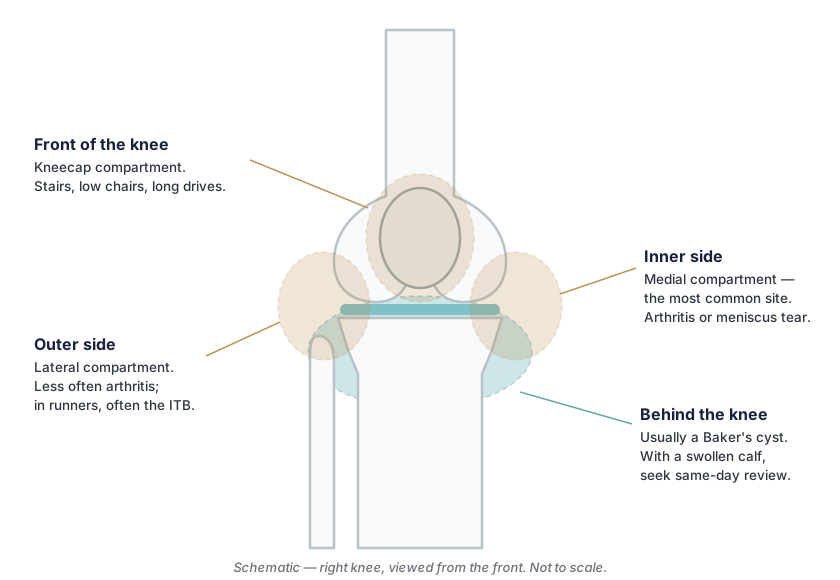
Pain at the front
The front of the knee is the kneecap and the groove in the thigh bone it slides through — the patellofemoral compartment. It is loaded hardest when the knee is bent under weight, which is why the pattern is so recognisable:
- Pain going down stairs more than up
- Pain standing up from a low chair or getting out of the car
- Aching after sitting for a long stretch with the knee bent — long drives, the cinema
- Discomfort squatting or kneeling

Arthritis behind the kneecap produces this pattern, and it is one of the three compartments assessed when deciding which knee operation, if any, suits a knee. In younger and more active people the same area more often points to a tendon problem — the patellar tendon below the kneecap, or the quadriceps tendon above it — which is activity-related, tender to press on, and tends to warm up as you get going.
Swelling sitting right on top of the kneecap, rather than inside the joint, is usually prepatellar bursitis. It is common in people who kneel for work.
Pain on the inner side
This is the most common location of all, for a straightforward mechanical reason: the medial compartment carries more load than the outer side, so it usually wears first. Inner-side pain is the typical presentation of knee osteoarthritis.
Two things produce pain in almost the same place, and telling them apart matters because the treatment differs:
Medial compartment arthritis builds gradually — months or years. It is worse the longer you are on your feet, better after rest, stiff first thing in the morning but loosening within half an hour. Walking distance shrinks over time. Over years it can produce a bow-legged appearance as the inner side loses height.
A medial meniscus tear more often has a beginning. A twist, a deep squat, getting up awkwardly — in older knees sometimes nothing memorable at all. It tends to catch, click or give way, and can be sharply tender along the joint line.
The two frequently coexist, particularly after 50, and a tear found on a scan is often part of the arthritis rather than a separate problem needing separate treatment. That distinction is worth getting right — it is the difference between an operation that helps and one that does not.
Pain slightly below the joint line on the inner side, in a small localised spot, is more likely pes anserine bursitis, where several tendons share an attachment.
Pain on the outer side
The lateral compartment wears less often than the medial, so isolated outer-side arthritis is less common — though when it does occur it can produce a knock-kneed alignment, and it is one of the patterns a partial knee replacement can address.
In runners and cyclists, pain on the outside just above the joint line that comes on predictably after a certain distance and settles with rest is usually iliotibial band syndrome rather than anything inside the joint.
A lateral meniscus tear and an injury to the outer collateral ligament both present here, generally after a specific incident.
Pain behind the knee
Pain at the back is the pattern most likely to be something other than the joint surface itself.
The common cause is a Baker’s cyst. An irritated knee — from arthritis or a meniscus tear — produces excess fluid, and if the underlying cause is not addressed the fluid keeps coming and drains backwards into a pouch behind the joint. It feels like fullness or tightness rather than sharp pain, and is worse when you bend the knee fully. Treating the cyst without treating what is producing the fluid tends to be temporary.
Hamstring tendon problems, and tears at the back attachment of a meniscus, also present here.
Pain behind the knee together with a swollen, tender or warm calf, or with breathlessness, needs same-day medical assessment. A deep vein thrombosis produces this combination and has to be excluded before anything else is considered.
Pain everywhere
Pain that is diffuse and hard to localise, in a knee that is often swollen and stiff, is a different pattern. It can mean arthritis in more than one compartment, which is the usual reason a total knee replacement is considered rather than a partial one.
It can also point away from osteoarthritis altogether — towards an inflammatory arthritis such as rheumatoid, or towards gout. The tell is usually the timing rather than the location, and it is covered in Is It Knee Arthritis or Something Else?.
What the timing adds
Location narrows the field. Timing usually decides it.
| What you notice | What it tends to suggest |
|---|---|
| Morning stiffness gone within 30 minutes | Osteoarthritis |
| Morning stiffness lasting an hour or more | Inflammatory arthritis — worth a GP review |
| Worse with activity, better with rest | Mechanical — arthritis, meniscus, tendon |
| Worse with rest, eases once moving | Inflammatory |
| Locking, catching, or having to wiggle it free | Meniscus tear or a loose fragment |
| Giving way | Ligament instability, or quadriceps weakness |
| Swelling within an hour of an injury | Significant — ACL rupture or fracture until proven otherwise |
| Swelling that comes and goes over months | Arthritis or a degenerate meniscus tear |
| Waking you at night | Arthritis that has moved past what simple measures are holding |
The last one matters more than people expect. Night pain and shrinking walking distance are two of the things weighed most heavily when considering whether a knee replacement is reasonable — considerably more than how the X-ray looks.
When to be seen urgently
Most knee pain is not an emergency. These are the exceptions:
- A knee that is hot, very swollen and painful, especially with fever or feeling generally unwell — infection must be excluded the same day
- Pain behind the knee with a swollen or tender calf — as above
- After an injury: unable to weight bear, an obvious deformity, or a knee that swells hard within an hour
- Severe, constant pain that is unrelated to position and unrelieved by rest
What happens next
If the pattern above sounds like arthritis, Understanding Knee Arthritis explains the condition itself, and Treating Knee Arthritis Without Surgery covers what the evidence supports before an operation is considered.
If you are not sure whether what you have is arthritis at all, Is It Knee Arthritis or Something Else? works through the alternatives.
If you have been told you need a scan, or already have one, What Knee Scans Actually Show explains what each type of imaging can and cannot answer.
This page describes general patterns in knee pain. It is not advice about your knee and it cannot diagnose one — that requires an examination and, sometimes, imaging. If your symptoms change significantly, or any of the urgent features above apply, contact your doctor.
Appointments can be made on (08) 6332 6365 or through the contact page. A GP referral is usually needed to claim the Medicare rebate for a specialist consultation.
What does pain on the inner side of the knee mean?+
Inner-side pain is the most common pattern in knee arthritis, because the medial compartment carries more load than the outer side and tends to wear first. It is also where a medial meniscus tear is felt. Arthritis pain usually builds over months or years and is worse the longer you are on your feet; a meniscus tear more often starts with a specific twist or squat and can catch or click. Both are felt in much the same place, which is why the pattern over time matters more than the spot itself.
What causes pain at the front of the knee?+
Pain at the front usually involves the kneecap and the groove it runs in — the patellofemoral compartment. The characteristic pattern is pain on stairs, getting up from a low chair, or after sitting a long while with the knee bent. It can be arthritis behind the kneecap, or in younger and more active people a tendon problem below or above the kneecap. Swelling right at the front over the kneecap, particularly in people who kneel for work, is more likely to be bursitis.
What does pain behind the knee mean?+
The most common cause is a Baker's cyst — fluid produced by an irritated knee draining backwards into a pouch behind the joint, which feels like fullness or tightness, worse when you bend fully. Hamstring tendon problems and some meniscus tears also present behind the knee. Pain behind the knee combined with calf swelling, calf tenderness or breathlessness needs same-day medical assessment, because a blood clot has to be excluded first.
Does the location of knee pain tell you what is wrong?+
It narrows it down but does not settle it. Location tells you which part of the knee is involved; the timing, what brings it on, and what it does over months tell you what is happening there. A diagnosis comes from combining those with an examination and, where it will change the plan, imaging. That is why this page describes patterns rather than offering an answer.
Is knee pain at night a bad sign?+
It is worth acting on rather than ignoring. Pain that regularly wakes you, or stops you finding a comfortable position, is one of the more meaningful indicators that arthritis has moved beyond what non-surgical treatment is managing. It is one of the things asked about when weighing up whether a knee replacement is reasonable. Night pain that is severe, constant and unrelated to position is a different matter and should be reviewed promptly.
What knee symptoms need urgent attention?+
A knee that is hot, very swollen and painful, particularly with fever or feeling unwell, needs same-day assessment to exclude infection. So does pain behind the knee with a swollen or tender calf, which can indicate a blood clot. After an injury, being unable to put weight through the leg, an obvious deformity, or a knee that swells hard within an hour should be assessed the same day.