
Flying After a Knee Replacement
How soon you can fly after a knee replacement, why long-haul is a different question from a short flight, what to do in the seat, travel insurance, and flying home to regional Western Australia.
“When can I fly?” is one of the most common questions at a review, and it is usually asked with a booking already made.
The honest answer is that it depends on how long the flight is more than on how the knee is. This page sets out why, what to do in the seat, and the things people forget — insurance, security, the swelling afterwards.
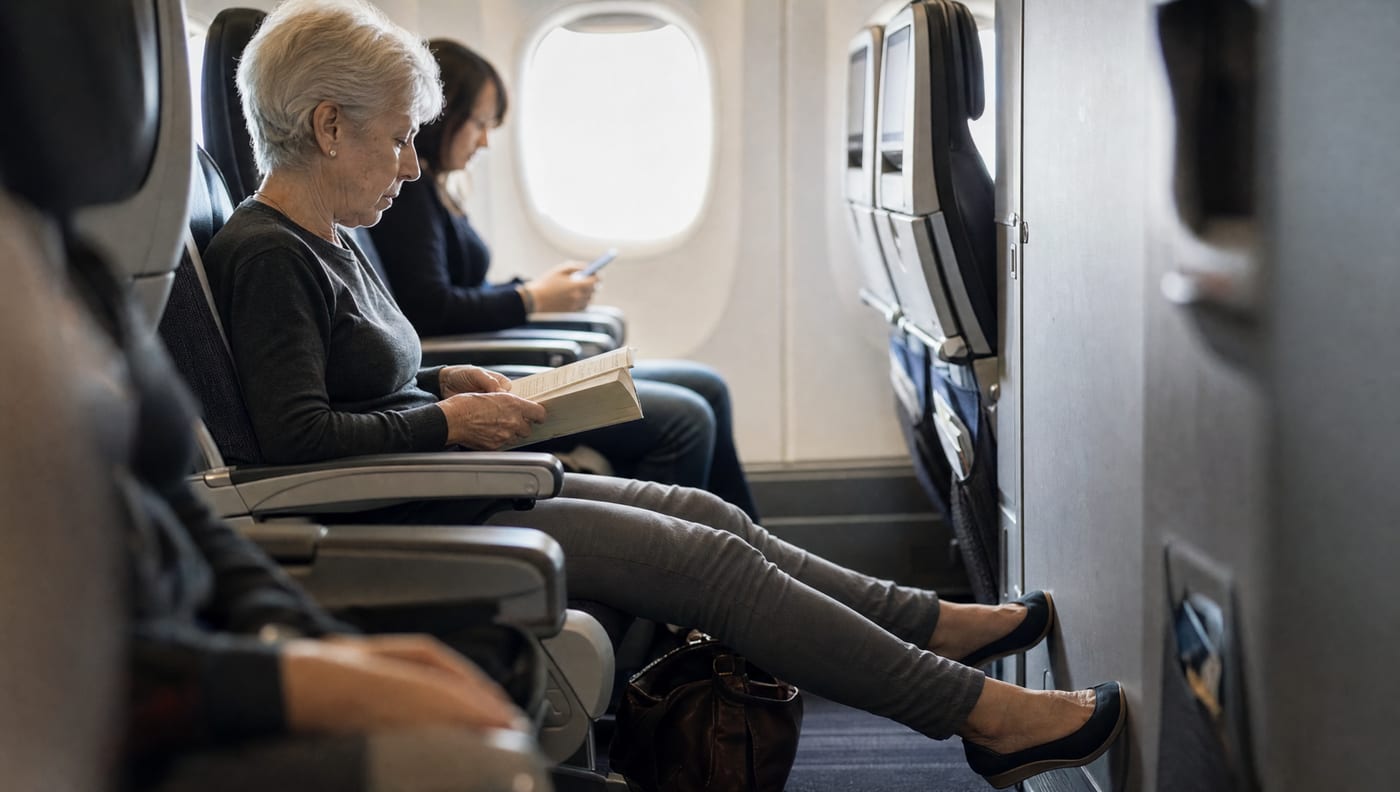
Why timing matters: it is about clots, not the knee
The knee itself is rarely the reason to stay on the ground. The reason is the clot risk.
A knee replacement raises the chance of a clot forming in the deep veins of the leg. That risk is highest in the first few weeks and remains above normal for about three months, which is why you are given clot prevention medication. Sitting still for hours is the same kind of exposure, and the two add together.
That is the whole logic of the timing:
- A short flight with the chance to stand and walk is a small additional exposure.
- A long-haul flight is a large one, stacked on a leg that is still in the higher-risk window.
Warning signs after a knee replacement sets out what a clot looks like and what to do about it. It is worth reading before you travel rather than after.
Roughly when, and what has to be true first
Surgeons differ, and the figures below are the usual range rather than a rule. A 2023 survey of UK hip and knee surgeons found the advised wait before flying ran from 14 to 180 days, and the authors found no evidence-based guideline to fall back on (Oputa 2023).
| The trip | Usually considered from |
|---|---|
| Short flight, up to 2 hours | About 4 to 6 weeks |
| Eastern states, Bali, Singapore | About 6 to 12 weeks |
| Long-haul, Europe or beyond | About 12 weeks, sometimes later |
The middle row depends on the knee and the plan, which is why it is a range.
Whatever the date, a flight is only reasonable if all of these are true:
- You are walking comfortably, and can get to the toilet and back without help
- You are off strong pain medication, or on a dose that does not sedate you
- The wound is fully healed and dry
- There is no new calf pain, tenderness or one-sided swelling
- You have kept taking the clot prevention, or have finished the course you were given
- You can get yourself on and off a seat and lift a small bag, or someone is with you who can
Perth makes the table more relevant than it is elsewhere in Australia. The eastern capitals are four to five hours from here, Bali is about three and a half, and Europe is a day’s travel. There is no short flight out of Perth to anywhere interesting.
Book flexible fares until you have been reviewed. Non-refundable tickets bought before the operation put pressure on the decision that should be made by the knee.
In the seat
None of this is complicated, and all of it helps.
- Choose an aisle seat, and an extra-legroom or bulkhead row if you can. You want to straighten the leg and stand without climbing over anyone.
- Stand and walk every thirty to sixty minutes. Set a timer on your phone. Walking the aisle matters more than any other single step.
- Between walks, move the ankles. Pump the feet up and down and draw circles. It keeps blood moving through the calf.
- Straighten the knee regularly rather than keeping it bent for hours. A knee held at ninety degrees for a long flight is stiff and swollen when you stand.
- Keep drinking water, and go easy on alcohol and sedatives. Both make you stiller and more dehydrated.
- Wear the compression stockings if you were given them.
- Take your pain relief on schedule. Do not wait for the knee to complain at thirty thousand feet.
- Carry all medication in your cabin bag, with a list. That includes the clot prevention.
Ask the airline for assistance when you book if the airport itself is a long walk. Airports are bigger than people remember, and a wheelchair or buggy between the check-in and the gate is sensible in the early weeks. It is not a concession.
Airports, security and the implant
A knee replacement may set off the metal detector. It is ordinary, screeners see joint replacements every day, and it does no harm to the implant. Tell the officer you have a knee replacement and expect a hand scan. Carry any implant card you were given, though it is not essential.
Long car trips are the same question
Western Australia has more road than most places, and a long drive is the same exposure as a long flight with less room to move. Stop at least hourly, get out and walk, and avoid driving yourself until you have been cleared to — the recovery page covers when that is.
After you land
Expect more swelling than usual in the foot, ankle and knee, and a stiffer knee in the first hour or two. Elevate it, ice it, and walk it around rather than going straight to bed. It should settle within a day or two.
Treat these as the same-day-call signs, wherever you are:
- A calf that is painful, tender, firm or warm, particularly on one side
- Fever or chills, or redness spreading from the wound
- Pain that is escalating rather than easing
Sudden shortness of breath or chest pain is an emergency anywhere in the world. Call the local emergency number first.
Flying home to the regional areas
A good many patients live in the Goldfields, Pilbara, Kimberley, Mid West or south of the State and fly to Perth for surgery. The same logic applies, with two additions.
First, say where you live when the operation is booked, not after it. How long you need to stay near Perth before your first review is a decision made in advance, along with where you will stay and who is with you.
Second, a flight home after discharge is a different exposure from a holiday: it is usually short, but you are at your most limited. Have somebody at the other end who can help you from the airport to the house.
One US study of 220 patients who flew home about three days after a hip or knee replacement found no more clots than in patients who did not fly (Cooper 2014). That shows a short flight home is not necessarily unsafe. It is not a reason to fly before you have been cleared, and it is why this is planned in advance.
Airlines and insurance, before you book anything
Check the airline. In the same UK survey, some airlines had restrictions on flying after joint replacement and others asked for a doctor’s certificate. Look at your airline’s policy when you book, and ask your surgeon for a letter if one is needed.
Check the insurance. Recent surgery is often treated as a declared condition. Some travel policies exclude it, and some limit cover for complications such as a clot or an infection, which are exactly the problems you would be paying for overseas.
Read the policy for the words recent surgery and complications, and ask the insurer in writing if it is unclear. For anything beyond a short domestic trip, it is worth getting this right before the ticket is bought.
Where to start
Bring the trip to your review, with the dates and the destination. Whether it is reasonable depends on the flight length, the knee, and the clot prevention you are on, and it is a five-minute conversation that is much easier before the booking than after.
If you would like to discuss it, phone the rooms on (08) 6332 6365 or use the contact page.
Studies cited
Both are indexed in PubMed.
- Oputa TJ et al. Is there a consensus on air travel following hip and knee arthroplasty? Cureus 2023. doi:10.7759/cureus.43814
- Cooper HJ et al. Risk of symptomatic venous thromboembolism associated with flying in the early postoperative period following elective total hip and knee arthroplasty. J Arthroplasty 2014. doi:10.1016/j.arth.2014.01.005
Next: Going back to work after a knee replacement — or what recovery looks like week by week.
How soon after a knee replacement can I fly?+
There is no single date, and surgeons differ widely: in a survey of UK hip and knee surgeons the advised wait ranged from 14 days to six months, and there is no guideline based on trial evidence. A short domestic flight is commonly considered from around four to six weeks, provided you are walking comfortably, off strong pain medication, the wound is healed and there are no calf concerns. A long-haul flight is usually held back until about twelve weeks. Those are ranges rather than rules, and your own timing is set at your review, not by a calendar.
Why is a long flight a bigger question than a short one?+
Because sitting still for hours is the same exposure that raises the risk of a clot in the leg after surgery. That risk is highest in the first weeks and stays raised for about three months, and a long flight adds to it. A one-hour flight with a walk to the toilet is a very different exposure from seventeen hours in a seat.
Do I need compression stockings to fly after a knee replacement?+
If you were given stockings after surgery, wear them for the flight. They are a modest help rather than a substitute for moving, so they sit alongside the clot prevention medication you were prescribed, not instead of it. Keep taking that for the full course, including on travel days.
Will my knee swell more after flying?+
Often, yes. Hours with the leg bent and still, in a pressurised cabin, make the leg and foot swell more than usual, and the knee is stiffer when you stand up. It is ordinary and settles with elevation, ice and walking over a day or two. Swelling that is one-sided and painful in the calf is different, and needs the same-day attention described on the warning signs page.
Can I fly home to regional Western Australia after surgery in Perth?+
Usually, after a conversation before the operation rather than after it. The questions are how long the flight is, whether you need to stay near Perth until a first review, and who is at the other end to help. Tell the rooms where you live when surgery is booked so the plan can be made in advance, including how long to stay in Perth.
Do I need to tell my travel insurer about a knee replacement?+
Check the policy before you book. Recent surgery is often a declared condition, and some policies exclude or limit cover for complications of it, which is exactly the cover you would want if a clot or infection occurred overseas. A cheap policy that excludes the thing most likely to go wrong is not saving money.