
Understanding Hip Arthritis
A plain-English guide to hip arthritis — why the pain is usually felt in the groin, what people commonly notice, what non-surgical treatment involves, and what hip replacement means. Written for patients before their appointment.

If you have been told there is arthritis in your hip, this page explains what that means, what people commonly experience, and what the treatment options are — so that when we meet, you already have the background and we can spend the time on your situation rather than the basics.
It takes about six minutes to read. There is a short list of questions near the end worth thinking about beforehand.
What hip arthritis actually is
Your hip is a ball-and-socket joint, joining the top of the thigh bone to the pelvis. Both surfaces are lined with cartilage — a smooth, slippery layer that lets the joint turn freely and cushions it as you move. It is tough, but it does not repair itself well once damaged, and over the years it can wear thin.
As that cushioning wears away, the joint no longer moves smoothly and the surfaces begin to grind rather than glide. That is what produces the pain and the stiffness, and why the hip gradually loses its range of movement.
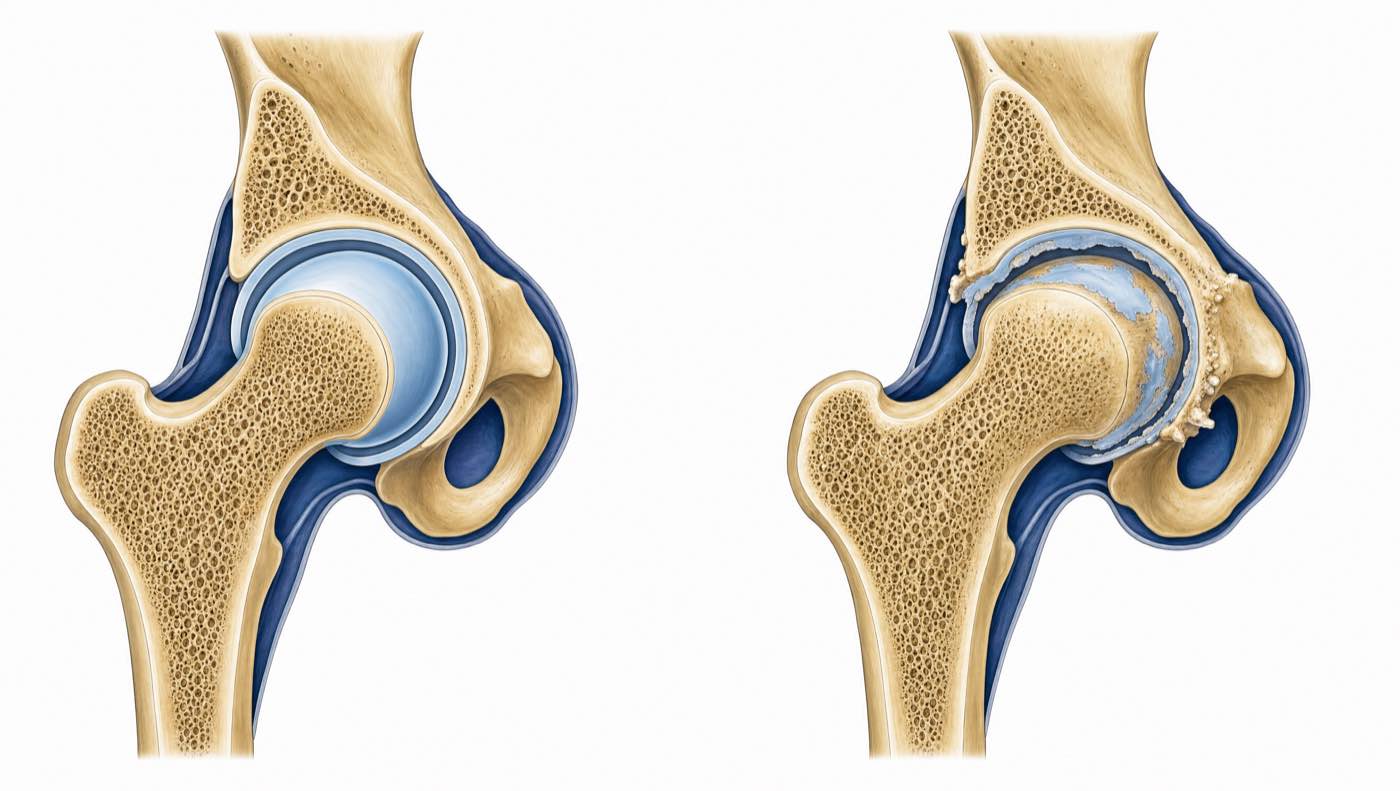
The hip is one of the larger weight-bearing joints in the body, carrying a substantial share of your body weight with every step. It is one of the more common places for osteoarthritis to develop.
It is worth saying plainly: this is not something you brought on yourself. Age, genetics, previous injuries and simply the load a hip carries over a lifetime all play a part. Staying active does not wear your hips out — being active is one of the better things you can do for them.
Where the pain is actually felt
This is the part that surprises most people, and it is worth understanding before your appointment.
Hip arthritis is usually felt in the groin. The joint itself sits deep in the groin, not on the outer side of the hip where most people point when asked where their hip is. Groin pain that worsens after a long walk or exercise is the classic pattern.
It often refers to the thigh and knee. The hip and knee share nerve supply, so an arthritic hip commonly sends pain down the front of the thigh towards the knee. Some people arrive convinced their knee is the problem when the joint responsible is the hip. This is one reason the examination matters as much as the imaging.
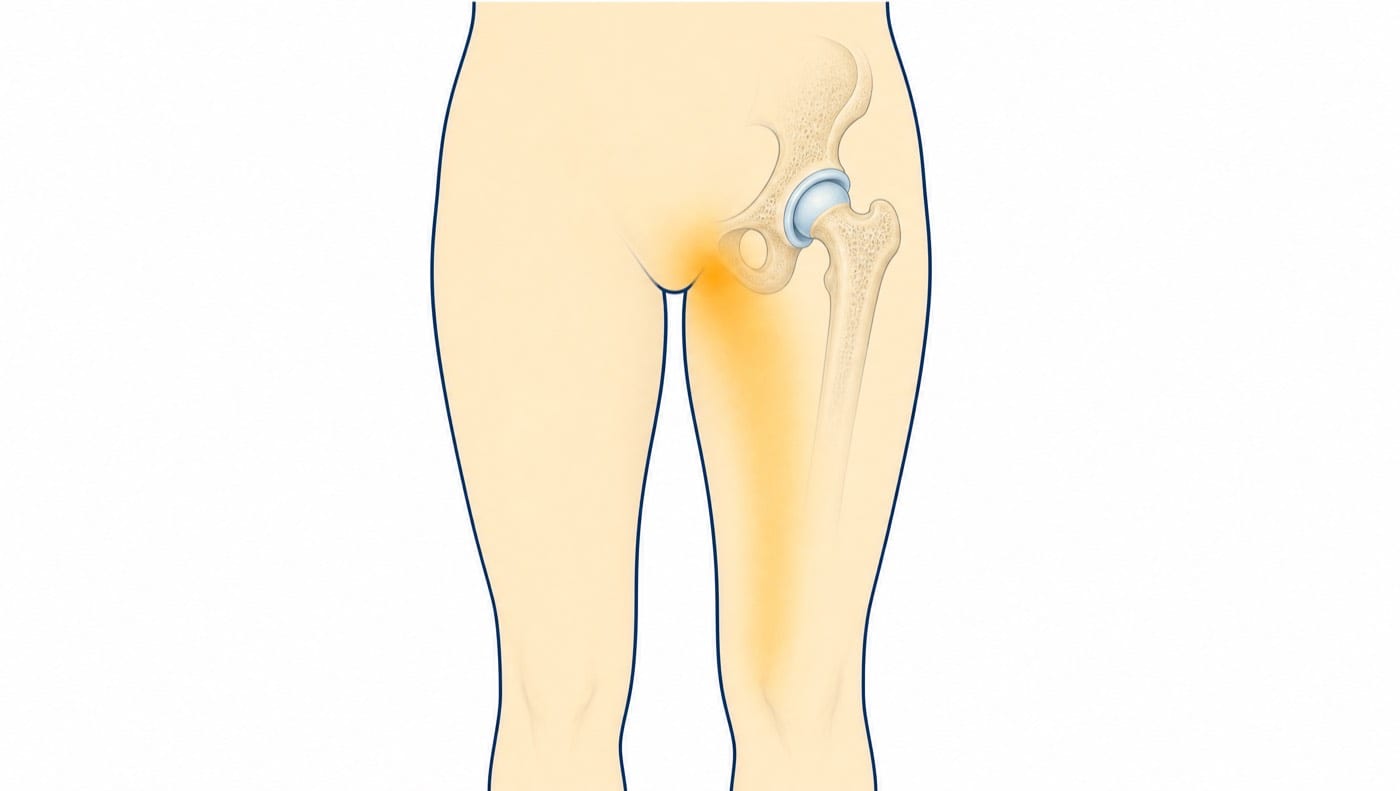
Pain on the bony outer side of the hip is usually something else. That area — over the bony prominence you can feel on the side — is more often the tendons or the fluid-filled bursa that sits over them, rather than the joint. It is a different problem with different treatment, and worth distinguishing early.
What people usually notice
- Groin pain, particularly after walking or exercise
- Pain referred down the front of the thigh, sometimes as far as the knee
- Stiffness, especially first thing in the morning or after sitting a while
- Difficulty putting on shoes and socks, or cutting toenails
- Trouble getting in and out of the car
- A limp, or the leg feeling like it is not moving freely
- Pain at night, or difficulty finding a comfortable sleeping position
- Symptoms worse after activity, or in cold weather
- Doing less than you used to, and avoiding things you once enjoyed
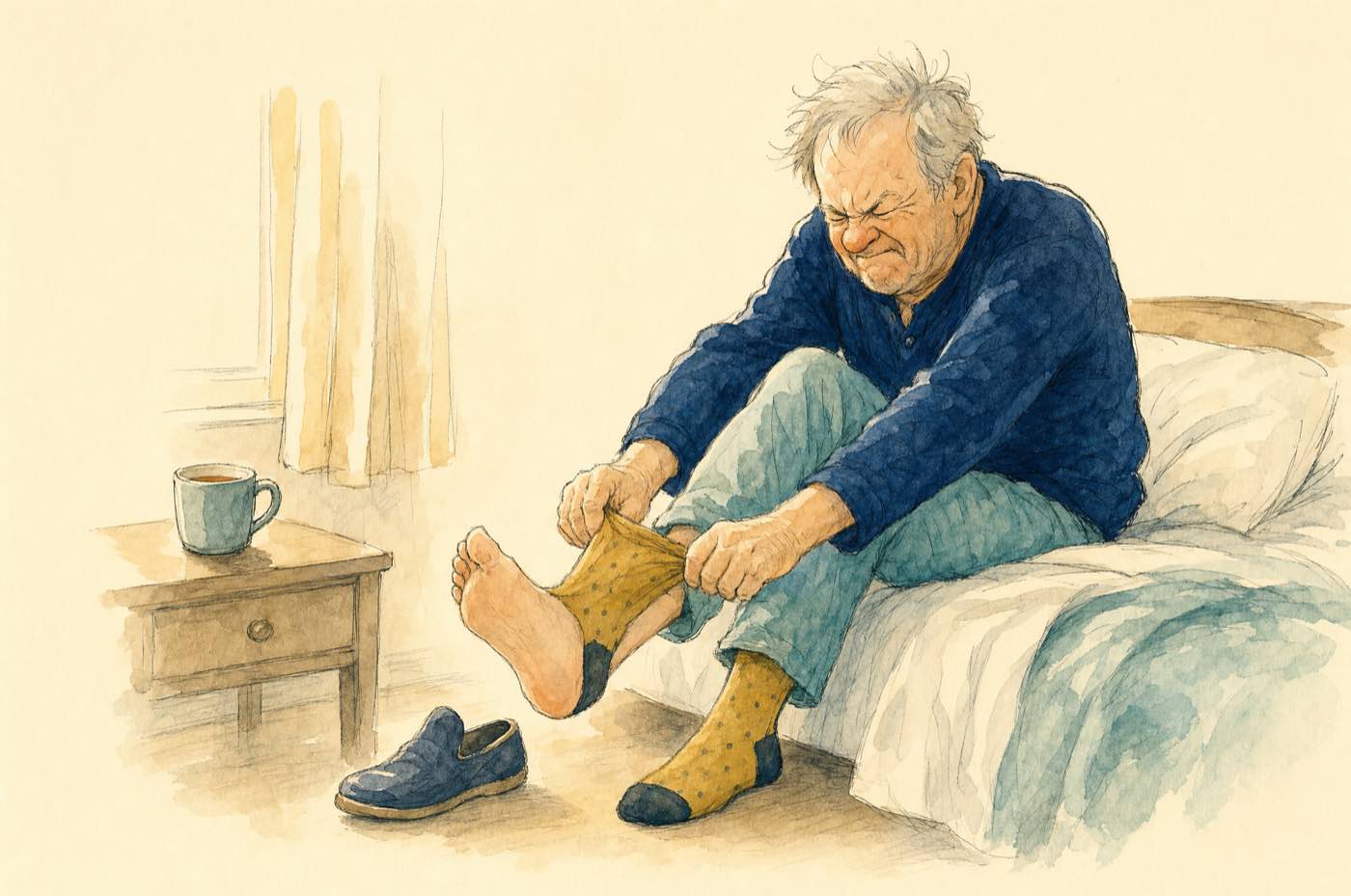
Most people find it comes in waves — stretches where the hip is manageable, and flare-ups where it is considerably worse before settling again. That pattern is normal.
The part that often matters most is not the pain itself, but what the pain stops you doing. That is worth thinking about before we meet.
Treatment that does not involve surgery
Most people start here, and for many the combination below keeps things manageable for a good while. These approaches work best together rather than one at a time.
Weight management
The hip carries several times your body weight with each step, so even a modest reduction takes a meaningful amount of load off the joint. It is one of the more effective things available — and it is not about appearance, it is about the mechanics of what the joint is carrying.
Exercise, particularly low-impact activity
When a joint hurts, the instinct is to rest it — but the muscles around the hip support the joint and take load off it, and they weaken quickly when you stop using them. Walking, cycling, swimming and targeted strengthening are among the better-evidenced treatments there are. Some discomfort while you build up is expected and is not a sign of damage.

Physiotherapy
A physiotherapist can build a program around your particular hip, check that you are doing the exercises in a way that helps, and progress you sensibly. It is more effective than exercising without guidance, especially early on, and can help with the stiffness that limits things like putting on shoes.
Pain relief for flare-ups
Simple pain medication and anti-inflammatories can settle a bad patch and let you keep moving — which matters, because resting a sore hip for weeks tends to make things worse rather than better. What is safe for you depends on your other health conditions and medications, so it is worth a conversation with your GP or pharmacist rather than a guess.
Injections
An injection into the hip joint can calm a flare-up and give useful relief. Two things are worth knowing. Unlike the knee, the hip joint sits too deep to inject reliably by feel, so it is normally done in a radiology department using ultrasound or X-ray guidance. And the effect is usually measured in weeks to a few months — it does not change the underlying arthritis. Injections buy comfortable time; they are not a lasting solution.
When surgery comes into the conversation
Hip replacement is generally considered when arthritis is advanced and the measures above are no longer keeping symptoms under control — when pain limits what matters to you, disturbs your sleep, or narrows your life more than you are willing to accept.
The operation replaces the worn joint. The damaged ball at the top of the thigh bone and the worn socket are both replaced with an implant, restoring a smooth surface for the joint to move on. There are two main ways of reaching the joint — an incision at the front (the direct anterior approach) or at the side extending around to the buttock (the posterior approach). Evidence suggests there is no major difference in outcomes six to twelve months on, and the approach used depends on your particular hip.
“A hip replacement is one of the most reliable operations in orthopaedics for taking pain away. But it is still a significant operation with a real recovery, and the timing should be yours — that is a conversation, not a foregone conclusion.” — Dr Rhys Clark
The results are generally very good. More than 90% of patients get significant pain relief, around 90–95% report being satisfied with the outcome, and it is rated among the top five elective operations for improving quality of life. Modern implants usually last around 15 to 20 years, with about 90% still working well at 18 years.
The operation takes about one to two hours, with a hospital stay of one to two days. Many people are back to normal activities within about six weeks, though full recovery takes six to twelve months. Age on its own is not a barrier — provided you are in reasonable health, surgery remains an option later in life.
Worth thinking about before your appointment
- What have you stopped doing because of your hip?
- How far can you comfortably walk now, compared with a year or two ago?
- Can you still put on your own shoes and socks, and get in and out of the car?
- Is the pain waking you at night?
- What have you already tried — exercise, physiotherapy, medication, injections — and what difference did each make?
- What would you most like to be able to do again?
- What questions or worries do you have about surgery?
Where to go next
If you are trying to decide: Do I Need a Hip Replacement? works through what actually indicates it is time, and what does not.
If surgery has been raised: Total hip replacement explains the operation, anterior hip replacement covers the approach and what it changes for your recovery, hip replacement recovery sets out the timeline week by week, and what it costs covers the three pathways.
Write your questions down
I am more than happy to answer any questions you have — that is what the appointment is for. But people very often think of them afterwards, on the drive home rather than in the room. Write them down before you come in and bring the list with you.

This page is general information about hip arthritis. It is not advice about your own hip, and it cannot tell you which treatment is right for you — that depends on your examination, your imaging and what matters to you, which is what your appointment is for. If your symptoms change significantly before then, or the hip becomes suddenly and severely painful, or you cannot bear weight on the leg, please contact your doctor.
Appointments can be made on (08) 6332 6365 or through the contact page.
Why is my hip pain in the groin rather than the hip?+
Because the hip joint itself sits deep in the groin, not on the outer side where most people point. Groin pain that worsens after walking or exercise is the classic symptom of hip arthritis. Pain on the bony outer side of the hip usually comes from the tendons or bursa there instead, which is a different problem with different treatment.
Can hip arthritis cause knee pain?+
Yes, and it catches people out. The hip and knee share nerve supply, so an arthritic hip often refers pain down the front of the thigh to the knee. Some people arrive convinced the problem is their knee when the joint causing it is the hip — which is one reason the examination matters as much as the scan.
Will exercise make my hip arthritis worse?+
Generally not. Strong muscles around the hip support the joint and take load off it, and low-impact activity such as walking, cycling and swimming is among the better-evidenced treatments. Some discomfort while you build up is expected and is not a sign of damage.
How long is the recovery after a hip replacement?+
The hospital stay is usually one to two days. Many people are back to normal activities within about six weeks, though full recovery takes six to twelve months. Early, gentle movement and physiotherapy matter — gradual activity prevents stiffness and helps healing.
What should I bring to my appointment?+
Your referral, any X-rays, CT or MRI scans of your hip with the reports that came with them, a list of your current medications, details of any previous hip surgery, and your questions.