
Understanding Knee Arthritis
A plain-English guide to knee arthritis — what it is, what people commonly notice, what non-surgical treatment involves, and what knee replacement means. Written for patients before their appointment.

If you have been told there is arthritis in your knee, this page explains what that means, what people commonly experience, and what the treatment options are — so that when we meet, you already have the background and we can spend the time on your situation rather than the basics.
It takes about six minutes to read. There is a short list of questions near the end worth thinking about beforehand.
What knee arthritis actually is
The ends of the bones in your knee are covered in cartilage — a smooth, slippery layer that lets the joint glide and cushions it as you move. It is remarkably tough, but it does not repair itself well once damaged, and over the years it can wear thin.
As that cushioning thins, the joint no longer moves as smoothly. In more advanced arthritis the protective layer can wear away entirely in places, leaving bone moving against bone. That is what produces the pain, the stiffness, and the grinding or creaking many people describe.
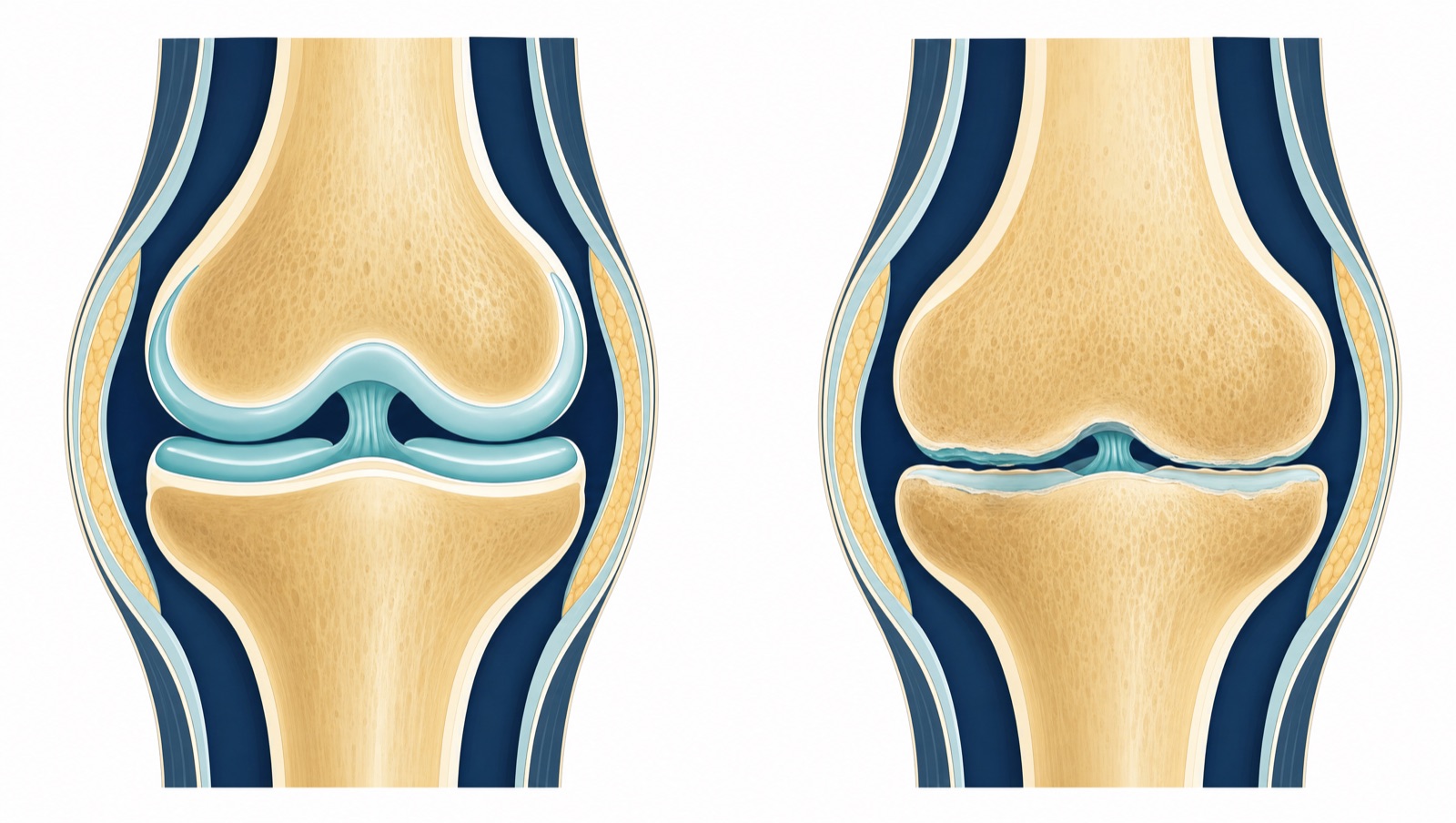
It is very common. Arthritis shows up on the X-rays of more than half of people over 65 — though not everyone with changes on a scan has symptoms, and how a knee looks on imaging does not always match how much trouble it is causing.
It is worth saying plainly: this is not something you brought on yourself. Age, genetics, previous injuries and simply the load a knee carries over a lifetime all play a part. Staying active does not wear your knees out — being active is one of the better things you can do for them.
What people usually notice
Everyone’s experience differs, but these are the things patients most often describe:
- Pain when walking, particularly on stairs, slopes or uneven ground
- Difficulty getting up from a low chair, the car, or the floor
- Stiffness first thing in the morning, or after sitting for a while
- Swelling, which may come and go
- Grinding, clicking or a creaking sensation in the joint
- Pain at night, or trouble finding a comfortable position to sleep
- The knee feeling unreliable, or occasionally giving way
- Doing less than you used to — shorter walks, avoiding stairs, giving up things you enjoyed
Most people find it comes in waves. There are stretches where the knee is manageable, and flare-ups where it is considerably worse for days or weeks before settling again. That pattern is normal and does not mean something has gone wrong.
The part that often matters most is not the pain itself, but what the pain stops you doing. That is worth thinking about before we meet.
Treatment that does not involve surgery
Each of these is covered in more depth, against what the Australian clinical guideline actually recommends, in Treating Knee Arthritis Without Surgery.
Most people start here, and for many the combination below keeps things manageable for years. These approaches work best together rather than one at a time.
Weight management
Roughly three to four times your body weight passes through your knee with every step, so even a modest reduction takes a surprising amount of load off the joint. It is one of the most effective things available — and it is not about appearance, it is about the mechanics of what the knee is carrying.

Exercise, particularly land-based programs
This is the one that surprises people. When a joint hurts, the instinct is to rest it — but strong muscles around the knee take load off the joint and support it. Structured walking, cycling and strengthening work for the thigh and buttock muscles are among the best-evidenced treatments there are. Some discomfort while you build up is expected and is not a sign of damage.
Physiotherapy
A physiotherapist can build a program around your particular knee, check that you are doing the exercises in a way that helps, and progress you sensibly. It is more effective than exercising without guidance, especially early on.

Pain relief for flare-ups
Simple pain medication and anti-inflammatories can settle a bad patch and let you keep moving — which matters, because resting a sore knee for weeks tends to make things worse rather than better. What is safe for you depends on your other health conditions and medications, so it is worth a conversation with your GP or pharmacist rather than a guess.
Injections
A corticosteroid injection into the joint can calm a flare-up and give useful relief. It is worth being clear about what it does, though: the effect is usually measured in weeks to a few months, and it does not change the underlying arthritis. Injections are a way of buying comfortable time — helpful, but not a lasting solution.
When surgery comes into the conversation
Knee replacement is generally considered when arthritis is advanced and the measures above are no longer keeping symptoms under control — when pain limits the things that matter to you, disturbs your sleep, or narrows your life more than you are willing to accept.
The operation resurfaces the worn parts of the joint. The damaged surfaces are removed and replaced with metal components, with a smooth plastic bearing between them taking the place of the worn cartilage.
“Total knee replacement is one of the most rewarding operations I do. But it is a significant operation with a real recovery, and it is not the right answer for everyone or at every stage. That is a conversation, not a foregone conclusion.” — Dr Rhys Clark
For most people it is very effective at relieving arthritis pain. It is also a substantial procedure: a hospital stay, then weeks of rehabilitation and exercise to regain movement and strength. The result depends partly on the surgery and partly on the work done afterwards. Most people are returning to normal activities over the following months rather than weeks.
Worth thinking about before your appointment
These are the questions most useful to have considered. There is no need to write anything down unless you would find it helpful.
- What have you stopped doing because of your knee?
- How far can you comfortably walk now, compared with a year or two ago?
- Is the pain waking you at night, or making it hard to get to sleep?
- What have you already tried — exercise, physiotherapy, medication, injections — and what difference did each make?
- What would you most like to be able to do again?
- What questions or worries do you have about surgery?
Write your questions down
I am more than happy to answer any questions you have — that is what the appointment is for. But people very often think of them afterwards, on the drive home rather than in the room. Write them down before you come in and bring the list with you.

This page is general information about knee arthritis. It is not advice about your own knee, and it cannot tell you which treatment is right for you — that depends on your examination, your imaging and what matters to you, which is what your appointment is for. If your symptoms change significantly before then, or the knee becomes suddenly and severely painful, hot or swollen, please contact your doctor.
Appointments can be made on (08) 6332 6365 or through the contact page.
Does arthritis on an X-ray mean I need surgery?+
No. Arthritis shows on the X-rays of more than half of people over 65, and many of them have few or no symptoms. How a knee looks on a scan does not always match how much trouble it is causing, and surgery is only one of several options.
Will exercise make my knee arthritis worse?+
Generally not — it is one of the most effective treatments there is. Strong muscles around the knee take load off the joint. Some discomfort while you build up is expected and is not a sign of damage. A physiotherapist can guide the pace.
How long does a cortisone injection last?+
Usually weeks to a few months. An injection can settle a flare-up and buy comfortable time, but it does not change the underlying arthritis, so the effect is temporary rather than lasting.
How much difference does losing weight make?+
More than most people expect. Roughly three to four times your body weight passes through the knee with every step, so even a modest reduction takes a meaningful amount of load off the joint.
When is a knee replacement considered?+
Generally when arthritis is advanced and non-surgical measures are no longer controlling symptoms — when pain limits what matters to you, disturbs your sleep, or narrows your life more than you are willing to accept. It is a shared decision, not one to be rushed.
What should I bring to my appointment?+
Your referral, any X-rays, CT or MRI scans of your knee with the reports that came with them, a list of your current medications, details of any previous knee surgery, and your questions.