
Researching Your Knee Replacement on TikTok? Here's What You Should Actually Trust
17 August 2026
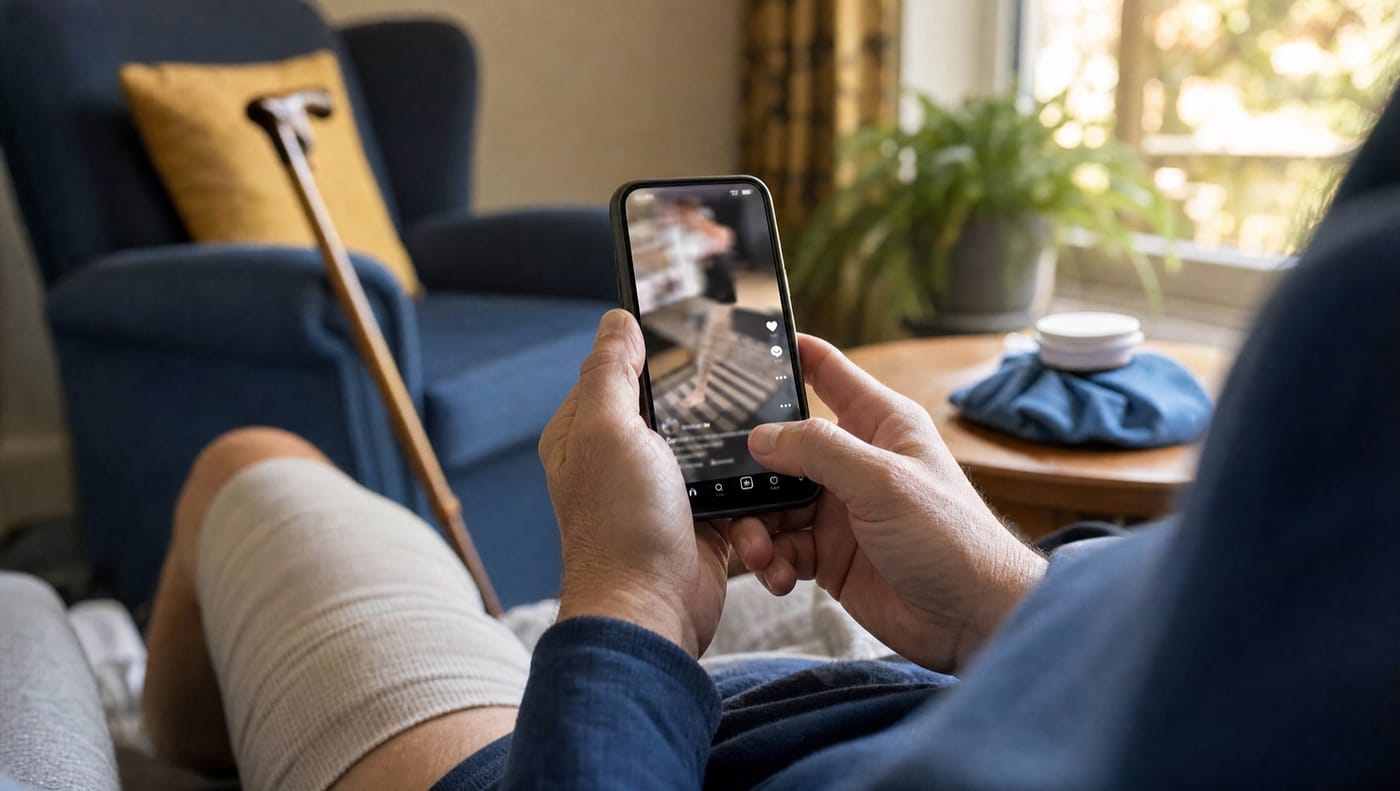
If you are facing a knee replacement, chances are you have already done what most of us do when something big is coming up: opened your phone and started scrolling. Recovery videos, “day in the life” clips, before-and-after walks down a hospital corridor. It is an understandable instinct — watching someone else go through it can feel more reassuring than any pamphlet a clinic hands you. But how much of what shows up in your feed is actually worth trusting?
A recent review of TikTok videos about knee replacement surgery, with a combined 2.7 million views, looked into exactly that question. The videos were not full of misinformation. They were full of gaps — and the gaps sat almost entirely in the detail that matters most before you agree to a surgery date.
What the research actually found
Videos made by medical professionals were, unsurprisingly, more accurate and higher quality than those made by patients or other non-medical creators. But here is the part worth sitting with: even the best medical content on the platform still fell well short of a strong benchmark for patient education material, scoring below two-thirds of the maximum score on the standard measures used to judge it.
In other words, there was not a lot of misinformation being deliberately spread. The bigger issue was incompleteness. Non-medical creators tended to share personal experience and opinion rather than evidence-based guidance, which makes sense — they are recounting their own recovery, not writing a clinical guide. The trouble is that one person’s story, however genuine, is not the same as the full picture of what to expect.
What is missing from the videos you are watching
Recovery content dominates. The vast majority of knee replacement videos on TikTok, whether posted by patients or professionals, focus on what recovery looks and feels like day to day. That is genuinely useful. Seeing someone walk unaided six weeks out, or manage the first flight of stairs, can help set a realistic timeline for your own.
What is harder to find is almost everything else that goes into a good decision. Anaesthesia options, the realities of possible complications, and the different types of implants available were each mentioned in fewer than one in twenty of the videos reviewed. These are not small details — they are often exactly the questions worth raising with your surgeon before you commit to a date, and they are largely absent from the content patients are watching most.
How to use social media without being misled
None of this means avoiding TikTok or Instagram altogether while you research your surgery. It means being clear-eyed about what social media is good for, and what it is not.
Use it to get a feel for the emotional and physical experience of recovery — the kind of thing that is genuinely hard to convey in a clinic room. Watching someone else navigate their first week home can be a comfort, and it can help you prepare practically, from arranging help around the house to knowing what pain and stiffness might feel like in the early days.
Do not use it as a substitute for a conversation with your own surgeon. Every knee is different, every patient’s health history is different, and the person in the video you just watched is not you. If something you have seen online raises a question — an implant, a complication you are worried about, an approach a creator swears by — bring it to your consultation. A good surgeon will not dismiss the question; they will welcome the chance to address it directly, with your own case in front of them.
It is also worth being a little more sceptical of confident claims from non-medical creators, and a little more receptive to the professionals whose content, while still imperfect, tends to be grounded in evidence rather than one person’s individual outcome.
The questions worth bringing to your consultation
The gaps the research found — implant type, anaesthesia, complication risk — map fairly directly onto the questions a Perth knee replacement consultation should cover. If those have not come up in what you have watched, they are worth asking directly:
- Which implant would suit my knee, and why that one over the alternatives
- What anaesthesia options are available, and what they mean for my recovery
- What the realistic complication risks are for someone with my health history
- Whether robotic-assisted planning is appropriate for my knee
- What the recovery timeline actually looks like, past the first few viral weeks
None of these are awkward questions. They are the ones a good surgeon expects, and wants, patients to ask.
If you are researching knee replacement in Perth
Social media has become a genuine part of how people prepare for surgery, and there is nothing wrong with that — it can offer comfort, community and a realistic look at what recovery involves. But the research is clear that it leaves real gaps, particularly around the more serious, decision-relevant detail that does not make for compelling short-form video. Treat what you watch online as one part of your research, not the whole of it, and save your specific questions for the person who actually knows your knee.
Dr Rhys Clark consults at St John of God Medical Clinic in Murdoch and in Mandurah, and operates at St John of God Murdoch, Sir Charles Gairdner Hospital and Perth Children’s Hospital. If you have been scrolling through recovery videos and want to talk through what your own knee replacement might involve, beyond what fits in a 60-second clip, get in touch to arrange a consultation.
Common questions
Is TikTok a reliable source of information about knee replacement surgery? +
It is a mixed source rather than an unreliable one. A recent review of TikTok videos about knee replacement, with a combined 2.7 million views, found videos made by medical professionals were more accurate than those made by patients or other non-medical creators — but even the best of that professional content still fell well short of a strong benchmark for patient education material. The bigger problem was not misinformation so much as an incomplete picture.
What do most TikTok videos about knee replacement leave out? +
Recovery footage dominates the platform, and it is genuinely useful for setting expectations about the day-to-day experience. What is far harder to find is anaesthesia options, the realities of possible complications, and the different types of implants available — each was mentioned in fewer than one in twenty of the videos reviewed, despite being exactly the kind of detail worth raising before you commit to a surgery date.
Why do patient-made knee replacement videos differ so much from what a surgeon would tell me? +
Patient creators are usually sharing their own experience and opinion, not evidence-based guidance — which makes sense, since they are recounting one recovery, not writing a clinical guide. A single story, however genuine, is not the same as the full range of what to expect, including outcomes that differ by anatomy, implant choice and general health.
Should I stop watching recovery videos while I research knee replacement? +
No — they have a real place. Recovery content is good for the emotional and practical side of preparing for surgery: what the first weeks at home actually feel like, how much help you might need, and what pain and stiffness look like day to day. The gap is in the decision-relevant detail — implant options, anaesthesia, complication risk — which belongs in a conversation with your own surgeon, not a 60-second clip.
Does Dr Rhys Clark discuss questions patients bring in from online research? +
Yes. Patients often arrive at a consultation with a question sparked by something they saw online, and that is a welcome starting point rather than an interruption. Dr Clark consults at St John of God Medical Clinic in Murdoch and in Mandurah, and works through implant options, anaesthesia and individual risk factors against your own knee, not a generic template.