
On Ozempic Before a Knee or Hip Replacement? What Actually Changes
25 August 2026
Five years ago this question did not come up. It now comes up most weeks.
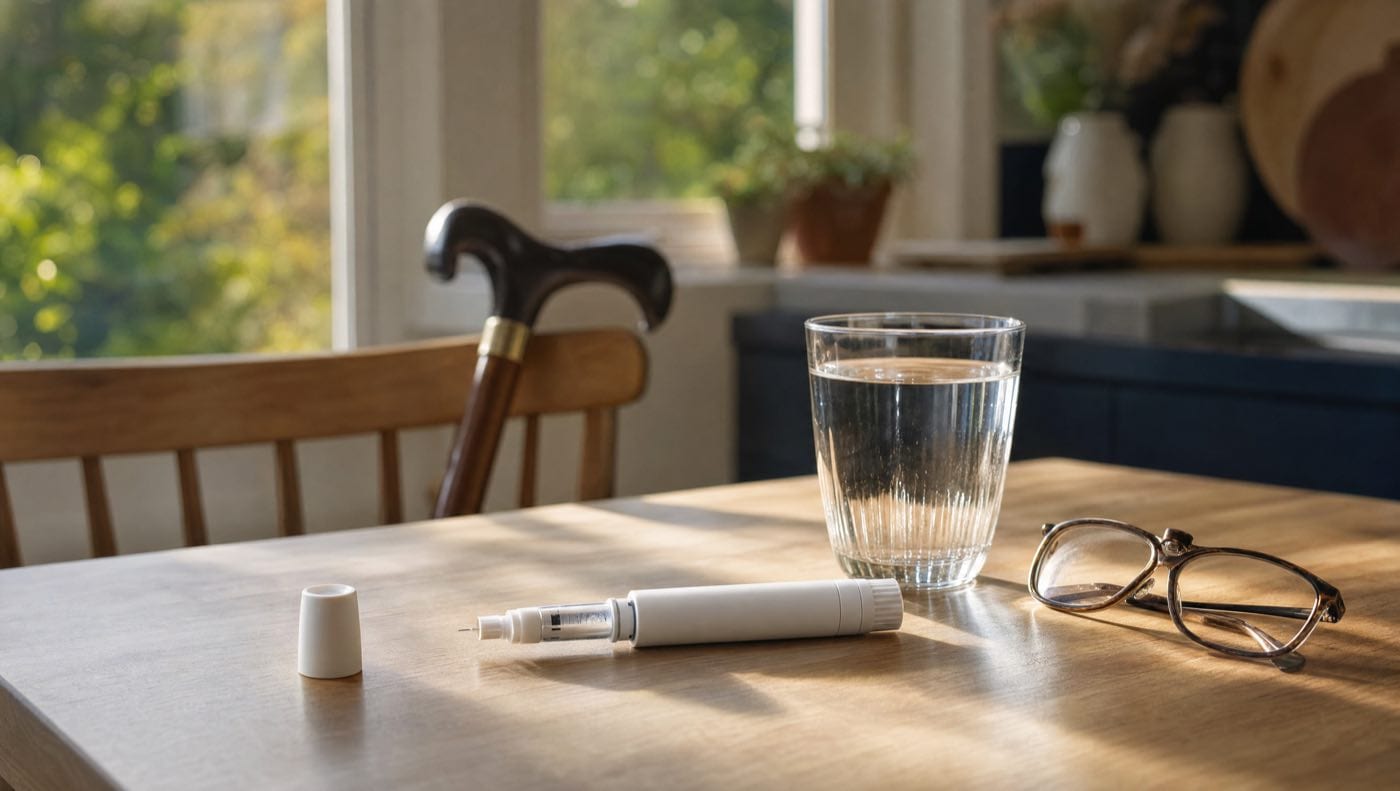
A patient arrives at a consultation about an arthritic knee or hip, mentions they are on Ozempic, Wegovy or Mounjaro, and asks some version of the same three things: do I stop it before surgery, does it make the operation safer, and might it mean I do not need the operation at all?
There are reasonable answers to all three, and the first one matters most, because getting it wrong can cost you your surgery date.
1. No, you do not stop it — but the fasting changes
This is the one to get right, and it runs against most people’s instinct.
The 2025 Australian clinical practice recommendations — produced jointly by the Australian Diabetes Society, the Australia and New Zealand College of Anaesthetists, the Gastroenterological Society of Australia and NACOS — advise continuing GLP-1 medications through the period around a procedure rather than ceasing them. Stopping has no clear evidence of benefit, and it risks destabilising blood sugar and interrupting weight management for no gain.
What does change is how you fast.
These medications work partly by slowing how quickly the stomach empties. That is useful when the goal is feeling full for longer. It is a problem under anaesthetic, because food can still be sitting in the stomach after the standard overnight fast, and stomach contents that reach the lungs — pulmonary aspiration — is a rare but serious complication.
So the guidance asks for something more than the usual:

- Clear fluids only for the 24 hours before surgery, starting from when you wake the day before. There is no limit on how much you drink during that period.
- Then the standard fasting instructions on top of that — clear fluids until six hours before, water only from six hours, nothing at all for the final two.
If you turn up not having done the clear fluid day, your anaesthetist has options. They can scan your stomach with ultrasound, use medication to help it empty, change the anaesthetic technique, or defer the operation. That last one is the reason this is worth knowing weeks in advance rather than the night before.
Tell your surgeon and your anaesthetist that you are on one. Say the name and the dose. It is not a confession, and it is not a judgement — it is a piece of information that changes the plan.
And follow the instructions your own hospital and anaesthetist give you. Protocols vary a little between sites, and theirs override anything written here.
2. Being on one before surgery appears to lower complication risk
This is newer, and it is genuinely encouraging.
A team at Yale published a study in the Journal of Arthroplasty in January 2026 looking at patients with type II diabetes having a total knee replacement, grouped by how long they had been taking semaglutide beforehand — under a month, one to two months, two to three, three to six, six to twelve.
The pattern was a dose of time rather than a threshold:
- Under a month was associated with fewer minor complications — wound problems, bleeding, kidney issues, pneumonia.
- Two to three months or longer was associated with fewer serious ones — deep infection, sepsis, blood clots, cardiac events.
The authors’ practical conclusion was that around three months of exposure before surgery is where the meaningful protection sits.
There is a real caveat and it is worth stating plainly: this was a study of patients with diabetes. Whether the same benefit applies to someone taking a GLP-1 solely for weight loss has not been demonstrated. It is plausible, and it is not proven.
What it does support is the timing point. If you are on one of these medications and a replacement is on the horizon, a two to three month run-up is better than a two-week one. That is a scheduling conversation worth having early.
3. It may delay the replacement — but read the numbers carefully
The most eye-catching finding of the year came out on 2 June 2026 in Regional Anesthesia & Pain Medicine.
Researchers used a large international database to follow adults with knee osteoarthritis, matching those on GLP-1 medications against similar patients who were not. Among people taking semaglutide or tirzepatide for three years, roughly 1.8 per cent had gone on to a knee replacement within eight years, compared with about 6.5 per cent of the matched comparison group.
Longer use tracked with lower rates. Shorter use showed a smaller version of the same effect.
Two mechanisms are proposed, and both are believable. Less body weight means less load through the joint with every step — the knee carries three to four times body weight during ordinary walking, and more on stairs. And these medications appear to have anti-inflammatory effects beyond weight alone, which would matter in a disease that is partly inflammatory.
Now the caution. This was a retrospective database study, not a trial. The authors themselves note they could not account for physical activity, frailty, or how severe each person’s arthritis was at the start. People who are prescribed and stay on these medications for three years may differ from those who are not in ways the data cannot see. Association is not the same as cause, and a headline that says these drugs prevent knee replacements is running well ahead of what was measured.
The honest reading: for some people, sustained weight loss appears to delay or avoid an operation. That has always been true of weight loss. What is new is a medication that makes the loss achievable for people who could not previously get there.
Which is worth sitting with, if you have been told to lose weight before surgery and have found that advice impossible to act on while your knee hurts too much to exercise. That trap is real, and it is not a failure of willpower. Weight and knee load sets out what the target actually is — 5 to 7.5 per cent of body weight, not a goal weight — and why a modest change does more than people expect.
4. What these medications do not fix
Two things belong in the same conversation, because they bear directly on how a joint replacement goes.
Bone health. Research presented at the 2026 AAOS Annual Meeting, following 73,483 matched patients over five years, found higher rates of osteoporosis among GLP-1 users than matched comparators — 4.1 per cent against 3.2 per cent — along with smaller increases in gout. The investigators recommended bone health surveillance in at-risk patients. Bone quality matters in joint replacement, because implants are fixed into bone and have to stay fixed.
Muscle. A meaningful share of the weight lost on these medications is lean tissue rather than fat — published trials commonly report somewhere between a quarter and 40 per cent, and more at higher doses. That matters more for a knee replacement than for almost any other operation, because your quadriceps does most of the work of the recovery. The result of a knee replacement is decided less in theatre than in the eight weeks of rehabilitation that follow it, and rehabilitation is muscle work.
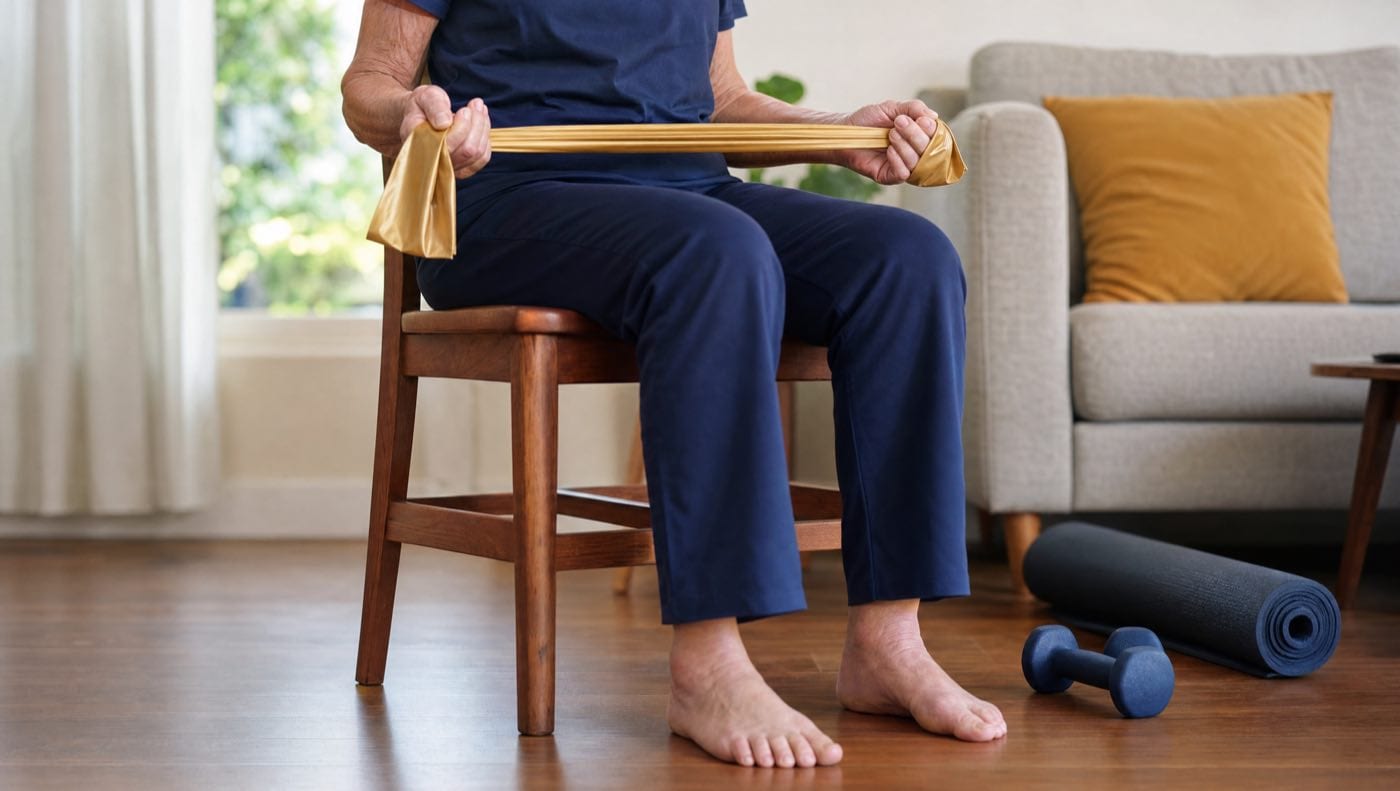
Neither is an argument against the medication. Both are arguments for what should accompany it: resistance training and adequate protein, deliberately, rather than weight loss on its own. Roughly 1.2 to 1.6 grams of protein per kilogram of body weight per day is the range commonly recommended alongside these medications, and it is worth getting specific advice on it from your GP or a dietitian.
If you are losing weight ahead of a knee replacement, you want to arrive at the operation lighter and stronger. Those are two separate projects.
What this means in practice
If you are on a GLP-1 medication and heading toward a hip or knee replacement:
- Tell your surgeon and anaesthetist. Name and dose, at the consultation, not on the day.
- Do not stop it unless you are specifically told to by the team looking after you.
- Expect the 24-hour clear fluid diet before your anaesthetic, and plan the day around it.
- Build in time if you can. Two to three months on the medication before surgery is where the evidence sits, rather than a fortnight.
- Add resistance training and protein, so the weight you lose is fat rather than the muscle you are about to need.
- Do not start or stop one on the strength of an article. That is a conversation with your GP or endocrinologist, weighed against your whole health rather than your knee.
The broader point is that these medications have changed who is a candidate for surgery and how well prepared they arrive. That is a good problem to have. It just needs to be planned for rather than discovered on the morning of the operation.
If a replacement is on the horizon, knee replacement in Perth sets out how the practice approaches it, Do I Need a Knee Replacement? works through the decision, and non-surgical knee treatment covers what is worth trying first. Your surgery: before the operation sets out how preparation works, and knee replacement recovery covers what follows.
Dr Rhys Clark is a knee and hip replacement surgeon in Perth, consulting at Murdoch and Mandurah and operating at St John of God Murdoch, Sir Charles Gairdner Hospital and Perth Children’s Hospital.
To discuss your own situation, phone the rooms on (08) 6332 6365 or email info@rhysclark.com.au.
Common questions
Do I need to stop Ozempic before knee replacement surgery? +
No. The 2025 Australian clinical practice recommendations, developed jointly by the Australian Diabetes Society, ANZCA, the Gastroenterological Society of Australia and NACOS, advise continuing GLP-1 medications through the perioperative period rather than stopping them. What changes is the fasting. Instead of the usual overnight fast, you are asked to take only clear fluids for the 24 hours before surgery, from waking the previous day, and then follow the standard fasting instructions on top of that. Tell your surgeon and anaesthetist you are taking one, and follow the instructions your hospital gives you — they take precedence over anything you read online.
Why do you have to fast for 24 hours on Ozempic before an anaesthetic? +
Because GLP-1 medications slow the rate at which the stomach empties, food can still be sitting in the stomach after a normal overnight fast. Under anaesthetic, stomach contents can be inhaled into the lungs — a rare complication called pulmonary aspiration, but a serious one. A day of clear fluids gives the stomach the best chance of being genuinely empty. If you have not followed the clear fluid diet, your anaesthetist has options, including scanning the stomach with ultrasound, adjusting the anaesthetic technique, or postponing the operation. The last of those is the reason it is worth getting right the first time.
Does taking Ozempic before joint replacement reduce complications? +
The evidence points that way, with an important caveat. A Yale study published in the Journal of Arthroplasty in January 2026 looked at patients with type II diabetes having knee replacements and grouped them by how long they had been on semaglutide beforehand. Under a month was associated with fewer minor complications such as wound problems and bleeding. Two to three months or more was associated with fewer serious ones, including deep infection, blood clots and cardiac events. The caveat is that these were patients with diabetes, so the findings do not automatically transfer to someone taking a GLP-1 purely for weight loss.
Can Ozempic help me avoid a knee replacement? +
For some people it appears to delay or prevent one, though the evidence is associative rather than proof of cause. A study published in Regional Anesthesia and Pain Medicine on 2 June 2026 followed adults with knee osteoarthritis in a large international database. Among those on semaglutide or tirzepatide for three years, roughly 1.8 per cent had a knee replacement within eight years, compared with about 6.5 per cent of matched patients who were not. That is a real difference, but the study could not account for things like physical activity, frailty or how severe the arthritis was to begin with.
How much weight do I need to lose to help my knee arthritis? +
The Australian guideline target is 5 to 7.5 per cent of body weight — for someone at 100 kg, that is 5 to 7.5 kg. It is not a goal weight and not a transformation. That range is where measurable improvement in pain and function begins to show, and it is a far more useful target than an open-ended instruction to lose weight. How you get there matters less than getting there.
Are there downsides to GLP-1 medications for bones and muscle? +
There are things worth knowing about. Research presented at the 2026 AAOS Annual Meeting, following 73,483 matched patients over five years, found higher rates of osteoporosis in GLP-1 users than in matched comparators. Separately, a substantial share of the weight lost on these medications is lean tissue rather than fat — published trials commonly put it between a quarter and 40 per cent. Neither finding is a reason to avoid the medication, but both are reasons to pair it with resistance training and adequate protein, particularly if you are heading toward an operation whose result depends on rehabilitation.
Should I start a GLP-1 medication to prepare for joint replacement surgery? +
That is a decision for your GP or endocrinologist rather than your surgeon, and it depends on your overall health, not just your knee. What is worth raising at your orthopaedic consultation is the timing. If you are already on one, or about to start, the surgical evidence favours a run-up of two to three months before the operation rather than a few weeks. Surgery is not withheld until a number on the scales is reached, but where there is time to use, it is worth using deliberately. Dr Rhys Clark is a knee and hip replacement surgeon in Perth, consulting at St John of God Medical Clinic in Murdoch and in Mandurah, and is happy to work through the timing with you and your GP.