
What People Get Wrong About ACL Reconstruction
1 February 2024 · Updated 26 August 2026
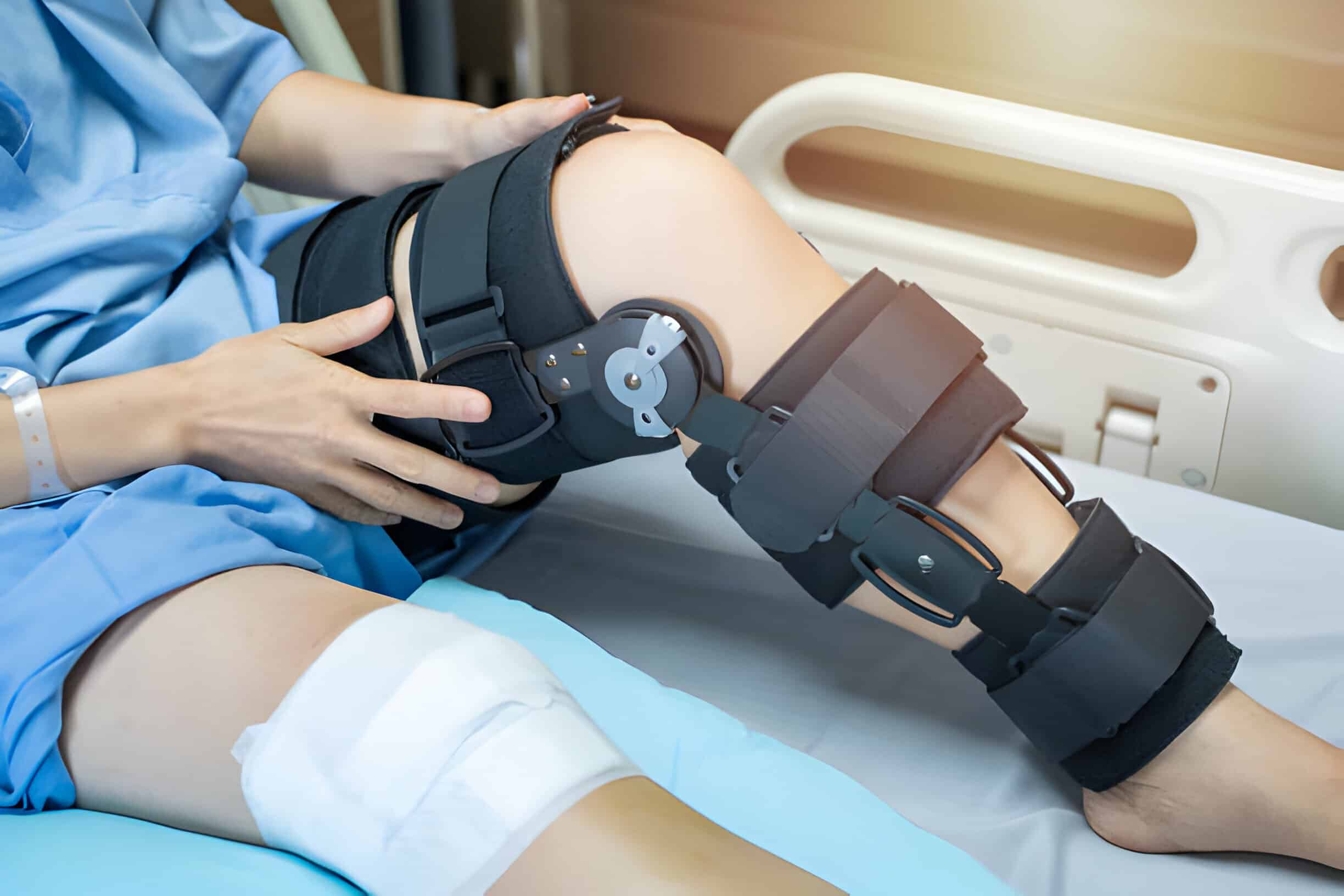
Most people arrive at a first ACL consultation with a picture already formed — from a teammate who had one done, from a physiotherapist, from whatever came up on the phone in the days after the injury. Some of that picture is usually right. A few parts of it are reliably wrong, and the wrong parts tend to be the ones that matter to the result.
Six that come up most often.
1. “The ligament gets stitched back together”
It gets replaced, not repaired. A completely ruptured ACL does not reliably heal back to its original function, so a tendon graft — commonly from the kneecap tendon or the quadriceps tendon of the same knee — is passed through tunnels drilled along the path of the original ligament and fixed at both ends.
That distinction explains a lot of what follows, including why the timeline is as long as it is. A graft is living tissue that has to remodel in its new position, and that process runs on its own clock.
2. “Surgery happens straight away”
Rarely, and usually for good reason. Operating on a knee that is still hot, swollen and stiff produces a worse result than waiting for it to settle.
Several weeks of physiotherapy first — sometimes called prehabilitation — is not a delay before the treatment starts. It is part of the treatment. Being able to fully straighten the knee before surgery is strongly associated with a better result afterwards, and the quadriceps strength you take into the operation is a reasonable predictor of the strength you come out with. Muscle lost beforehand has to be rebuilt afterwards, on top of everything else.
There are exceptions that do push towards earlier surgery: a locked knee, other ligaments ruptured at the same time, or a repairable meniscal tear that is better dealt with promptly.
3. “A torn ACL always needs reconstructing”
It does not. The ligament is not the only thing holding the knee steady — the muscles around it, and the control you have over them, contribute a great deal, and rebuilding that control is something rehabilitation can do without an operation.
The decision turns on two things: what you need the knee to do, and whether it actually gives way. Pivoting and contact sport ask something of the ACL that walking, cycling and straight-line running do not. Someone returning to netball is in a different position from someone who wants to walk the dog.
Rehabilitating first and deciding afterwards is a reasonable and increasingly common sequence. It loses very little, because the rehabilitation is needed either way. ACL rupture covers that decision properly.
4. “Six months and you’re back”
This is the one that causes the most trouble, because at six months the knee usually feels fine.
Light straight-line training is generally possible from four to six months. Return to pivoting and contact sport is typically nine to twelve, and that gap is where people come unstuck. The graft is weakest somewhere in the middle of its remodelling — at roughly the point most people start feeling ready.
Research on young athletes found that those returning to sport before nine months had a rate of new knee injury around seven times higher than those who waited. Notably, achieving symmetrical muscle strength did not remove that risk, which suggests time is doing something training cannot substitute for.
5. “Once it’s fixed, the risk is gone”
Among athletes under 25 returning to sport, reported second ACL injury rates are around 23%. In adolescents roughly 15 to 20 years old, figures as high as 30% requiring a further reconstruction within two years of returning have been reported. The risk applies to the reconstructed knee and to the other one.
That is not an argument against the operation. It is the reason the last three months of a nine-month programme exist — the months that feel unnecessary are the ones doing the protecting.
6. “The surgery is the hard part”
The operation is arthroscopic, takes a morning, and most patients go home the following day. Almost everything that determines the result happens either side of it: the weeks of preparation before, and the better part of a year of rehabilitation after.
It is an unusual operation in that respect, and worth understanding before committing to it.
ACL reconstruction sets out the graft options, the operation and the full rehabilitation timeline. ACL rupture covers the injury itself and whether reconstruction is needed at all.
To have a knee assessed, book a consultation, phone the rooms on (08) 6332 6365 or email info@rhysclark.com.au. Dr Clark consults at Murdoch and Mandurah.